wellnessmaxxing
How do wearable technologies + social media normalize self-surveillance in women?
For my design master’s thesis, I explored this question by creating a speculative wellness brand that pushes self-tracking to the extreme.
Timeline
September - December 2025
Skills
Speculative design
Design as critique
User research
Prototyping
Visual design
Digital fabrication
Storytelling
Tools
Microcontrollers + sensors
React
C++/Python
Figma
Laser cutting
3D modeling / printing
Awards*
Berkeley MDes - Top Thesis Project Award
Background
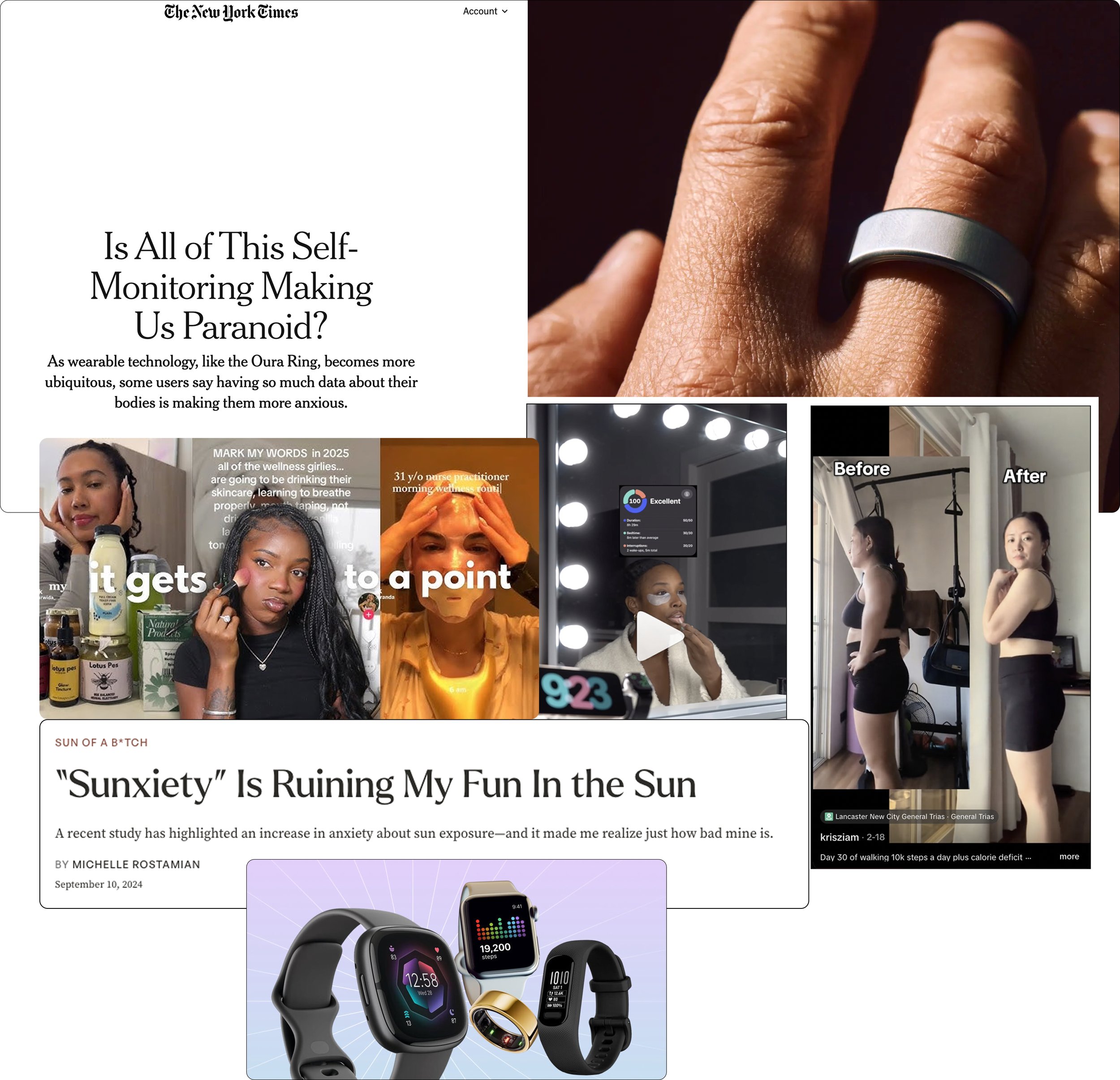
Wellness has become a product-driven industry where constantly improving yourself feels expected, not optional. For young women especially, wellness culture is shaped by ideals of thinness and youth. This is amplified by influencer-led wellness content on algorithmic social media platforms like TikTok. At the same time, wearable technologies reinforce these ideals of self-improvement by continuously measuring the body in ways that can induce anxiety.
While existing research and design work examines wellness content on social media and self-tracking separately, there’s little work in understanding how they work together as a larger cultural system.
research
To better understand the relationships between young women, wearables, and wellness content on social media, I interviewed a range of people: doctors, public health experts, misinformation researchers, influencers, and everyday social media users.
On the social media side, I asked questions around how encountering wellness content shapes self-perception, how to mitigate misinformation, and how wellness content is produced. On the wearables side, I tried to understand what data users cared about most and how they correlate that data to their own wellness.
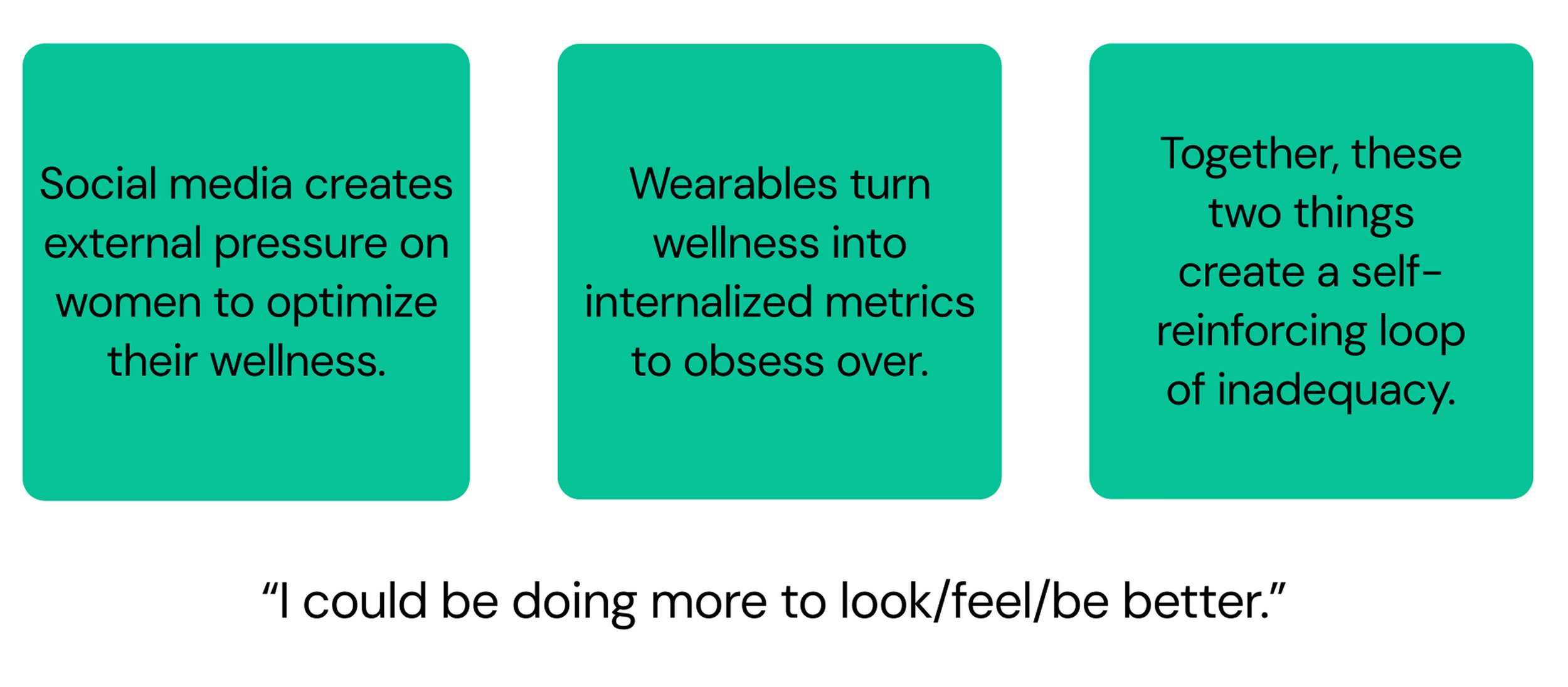
I came away with these main insights about the relationship between social media and wearable devices.
Most importantly, I realized that everyone I talked to appreciated having these conversations to reflect on their own relationships with wellness. I realized that rather than using design to solve a problem in this space, I wanted to use design to provoke more of this reflection and critical thinking.
How might I design provocations that show how wellness technologies + social media shift women from self-care to self-surveillance?
Prototyping
Could the way we interact with social media provoke self-surveillance in the moment?
What happens when you are hyper-aware of your body while scrolling through wellness content? I explored this discomfort to understand whether it could represent a plausible future direction for social media.
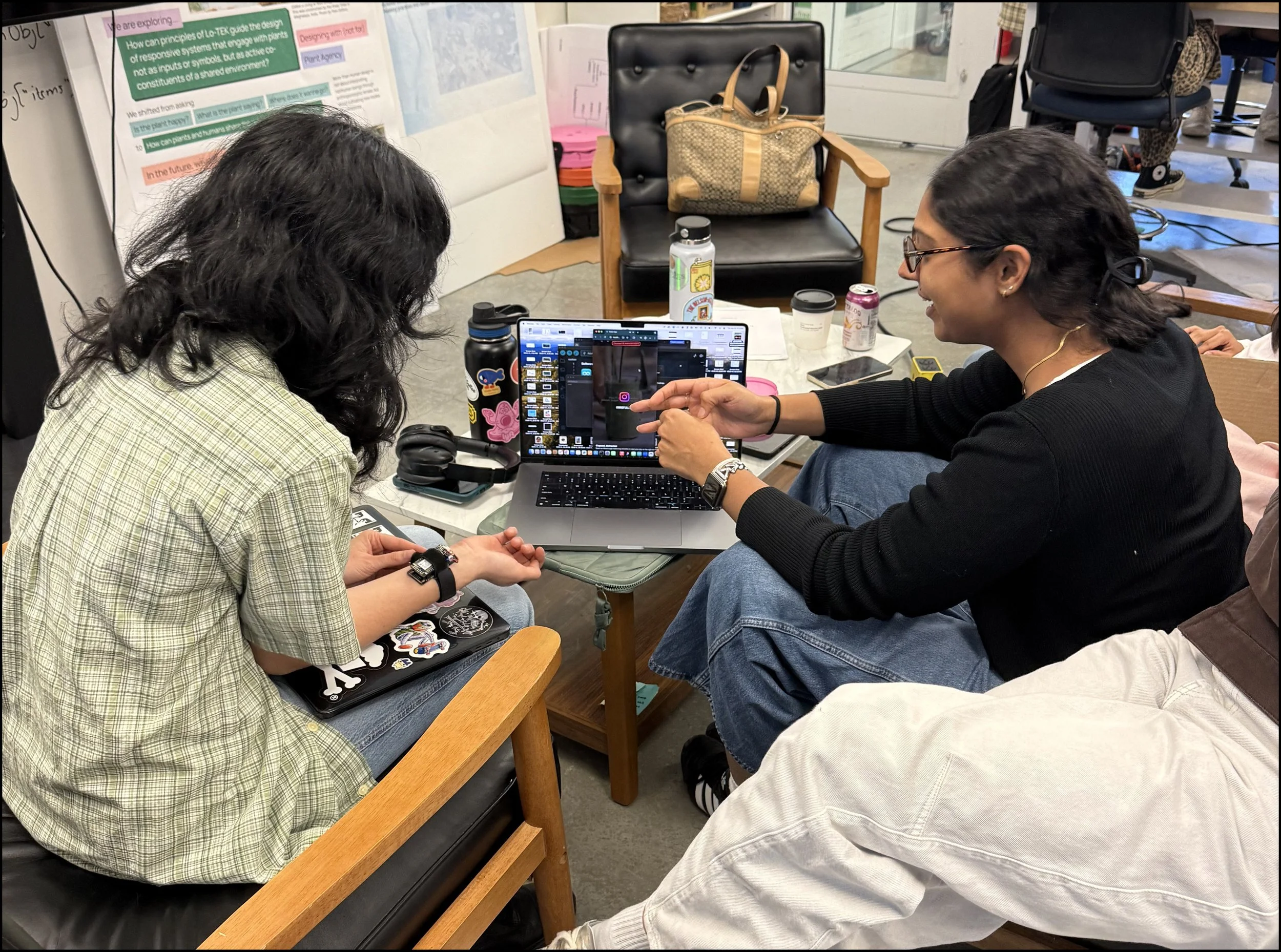
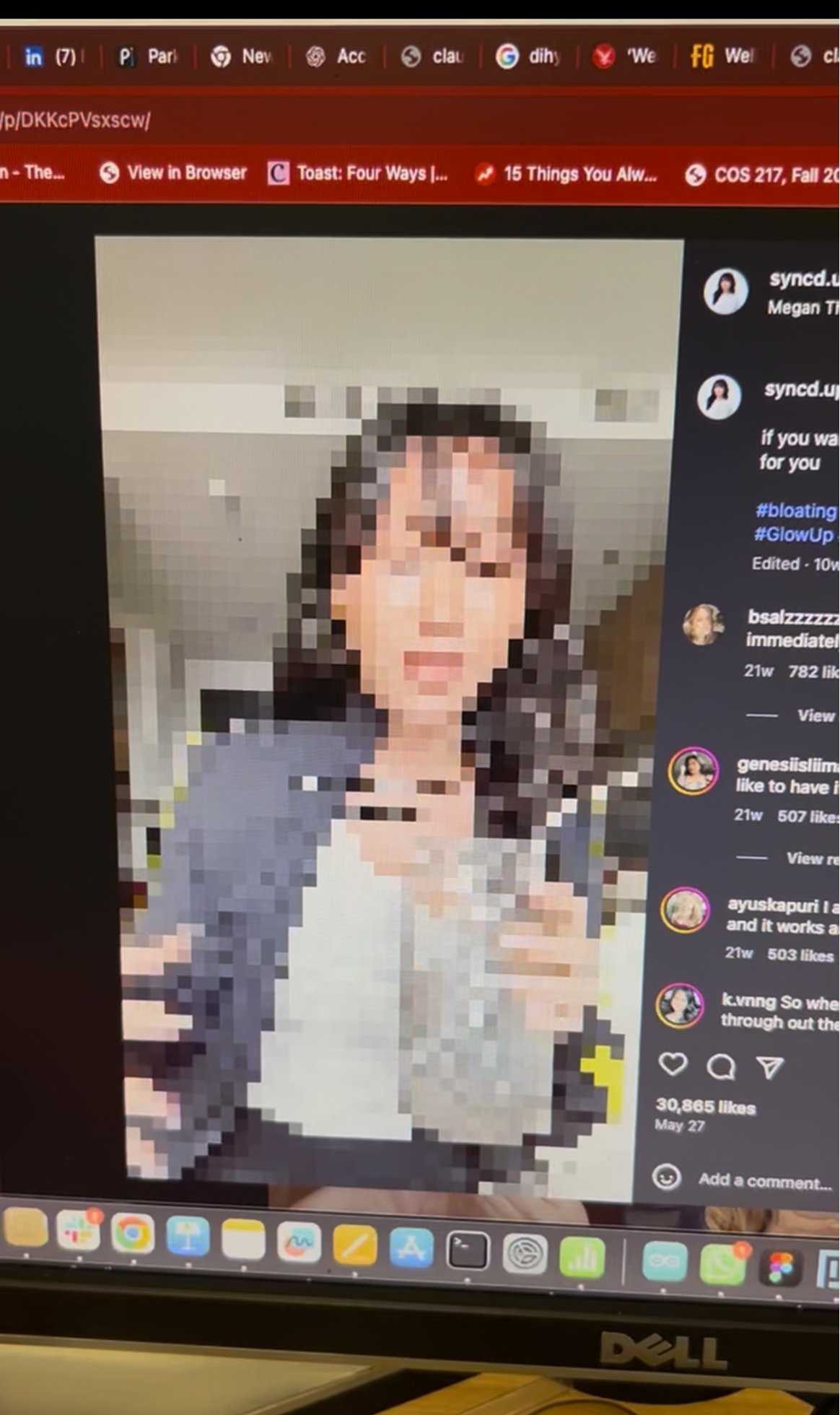
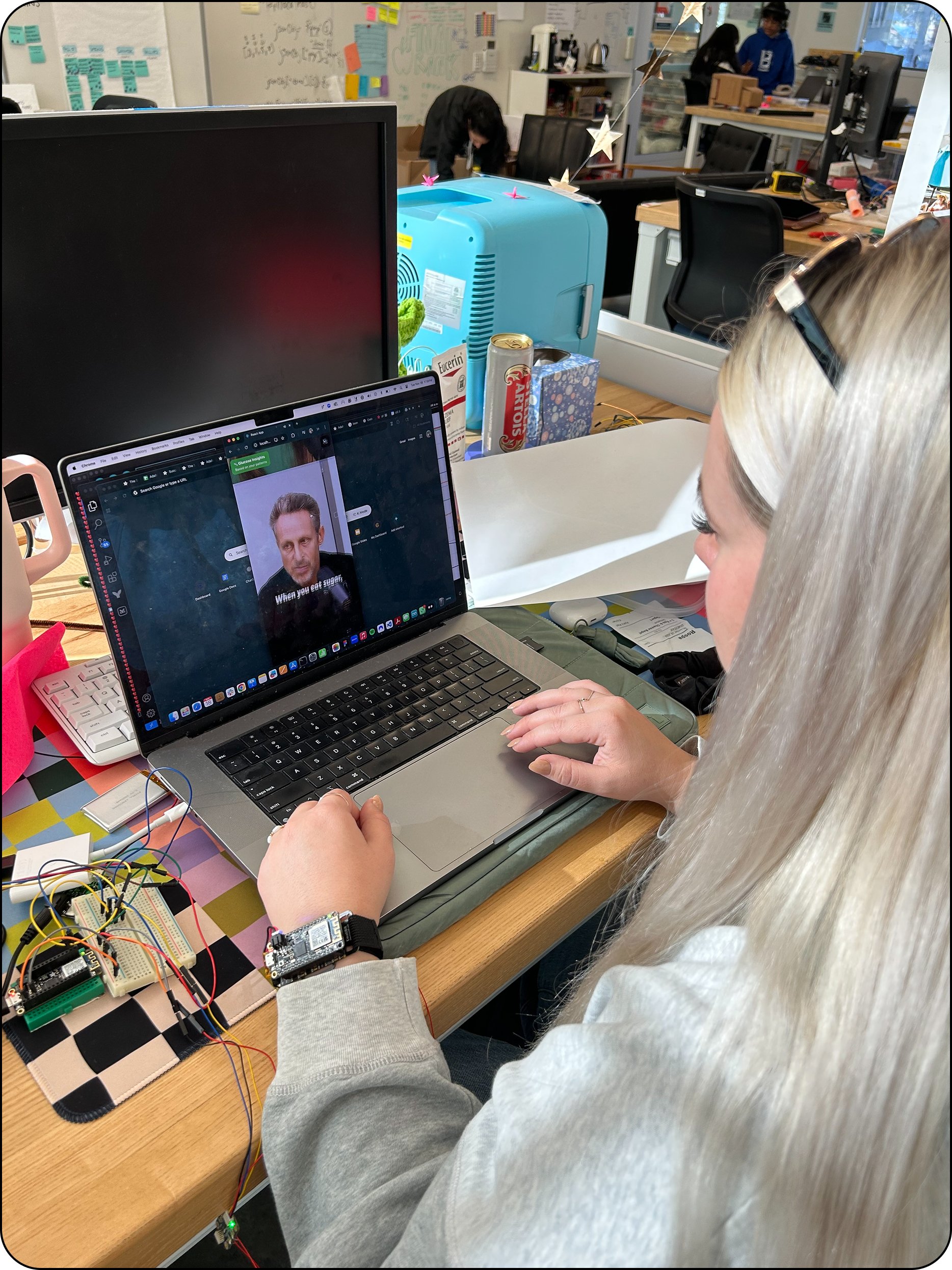
To do this, I built web-based social media feeds that responded to real-time bodily signals, using technologies like Emotibit (emotion and stress tracking) and WebGazer (eye tracking).
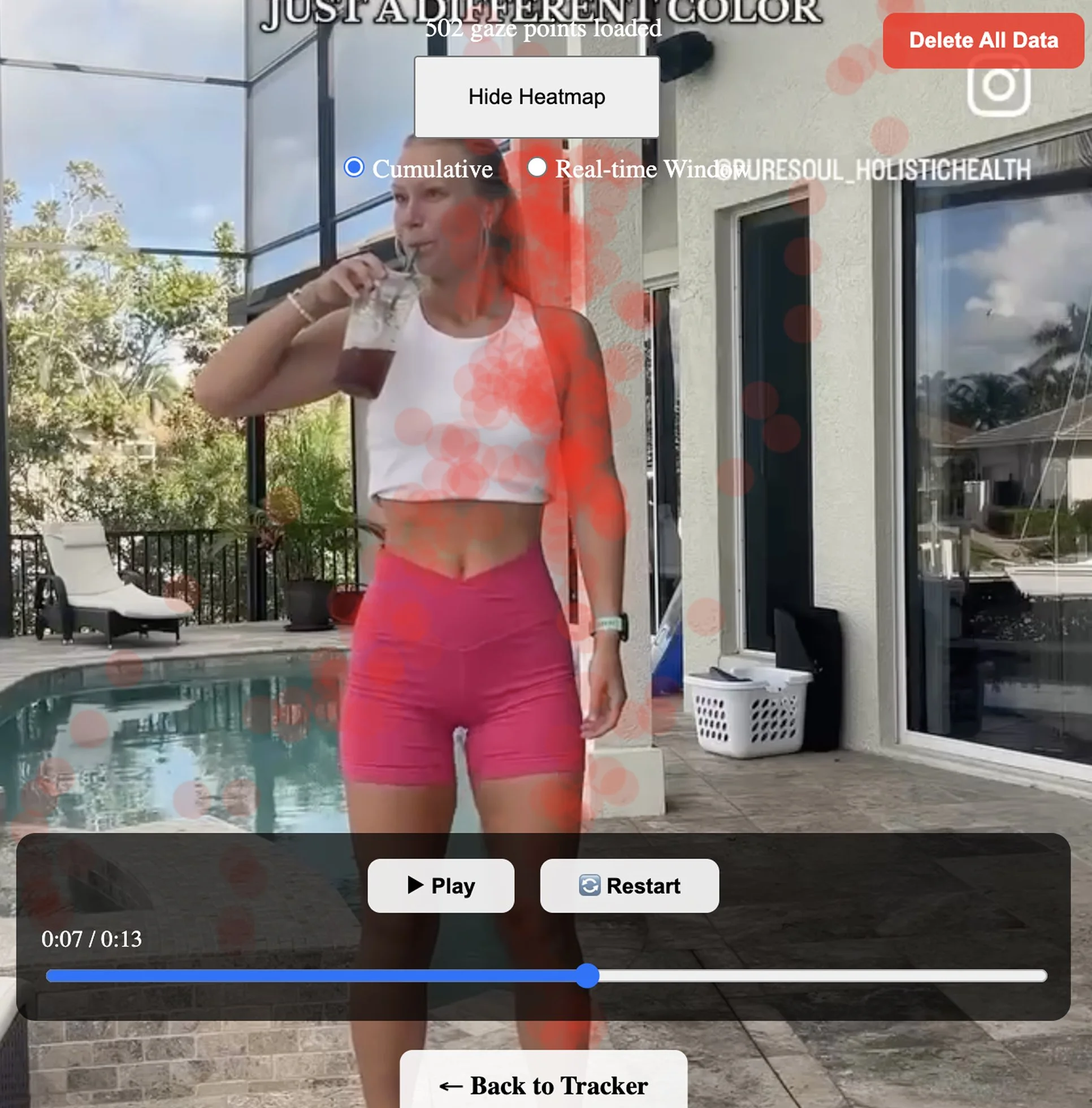
Showing how users consume content in real-time through gaze tracking.
However, when I tested these prototypes with young women, they didn’t feel the anticipated discomfort or heightened self-consciousness about their bodies.
What if biodata controlled your algorithm?
Could new types of wearables reveal how self-tracking can cross into self-surveillance?
I shifted my prototyping focus to wearables themselves by thinking about what kinds of things might be desirable to track in the future to become thinner and younger. I became interested in the idea of tracking increasingly specific and unnecessary things about your body.
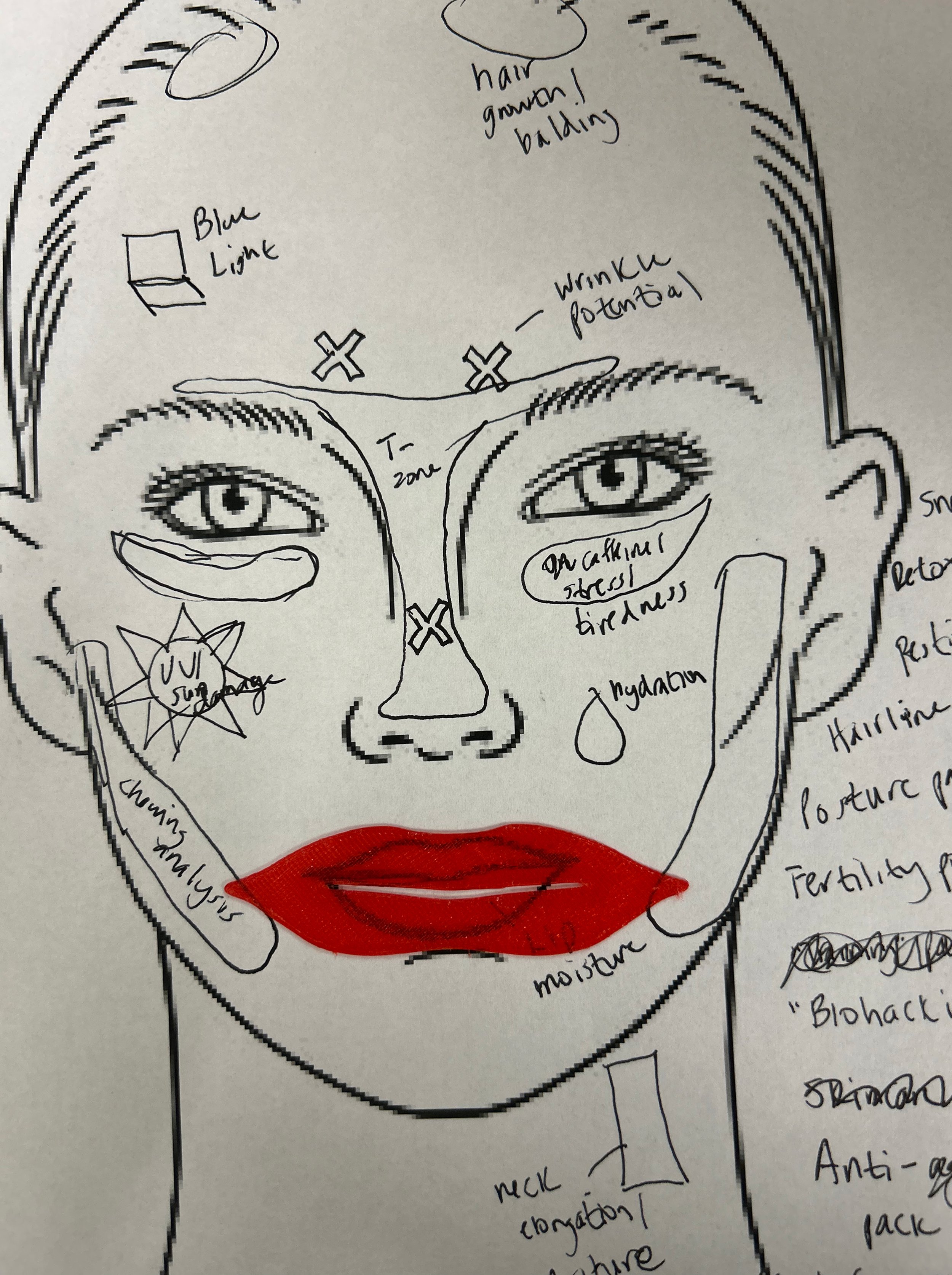
Plotting new measurement points on the face
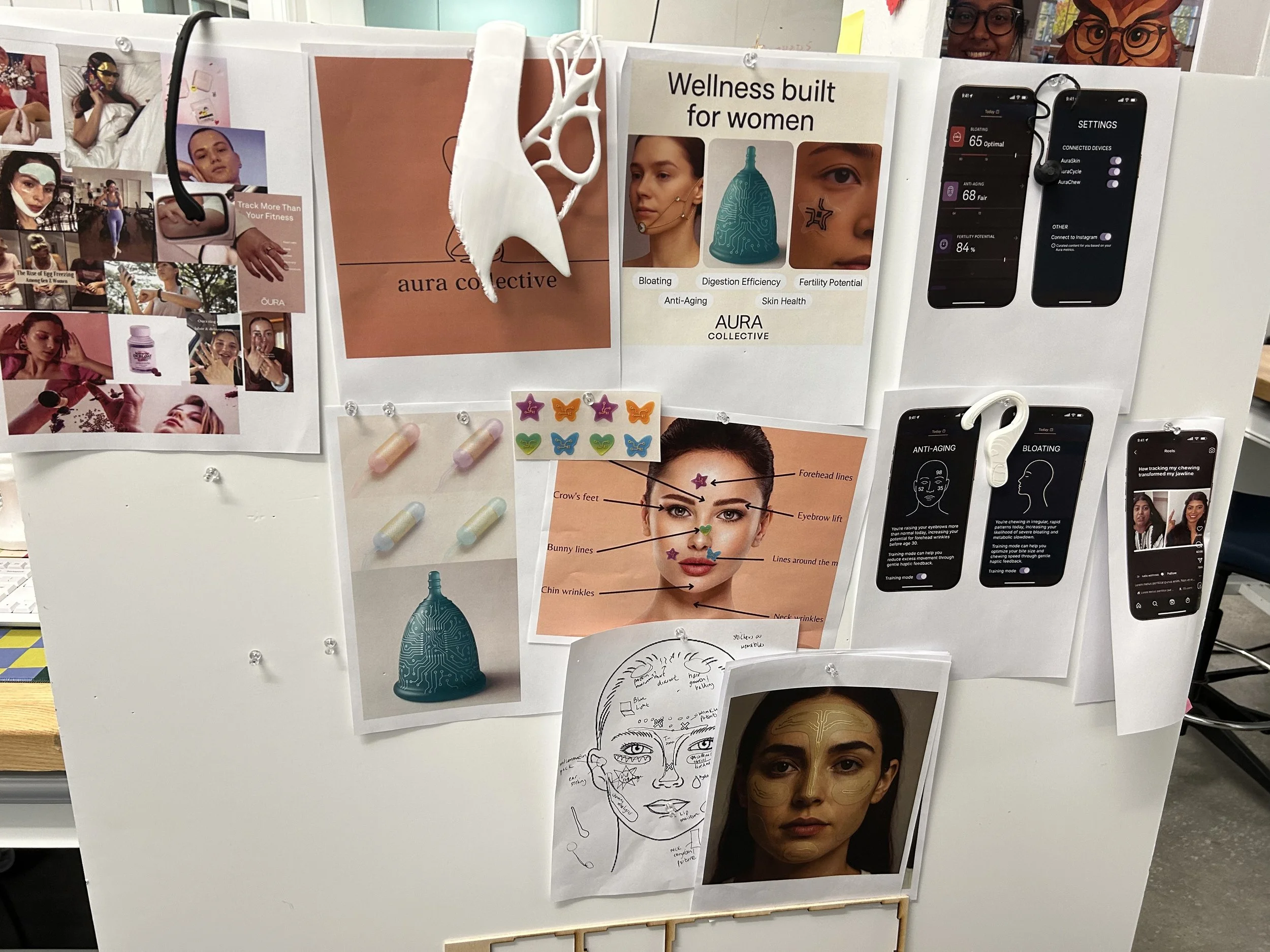
Moodboard for future forms and aesthetics of women’s wellness wearables/tech
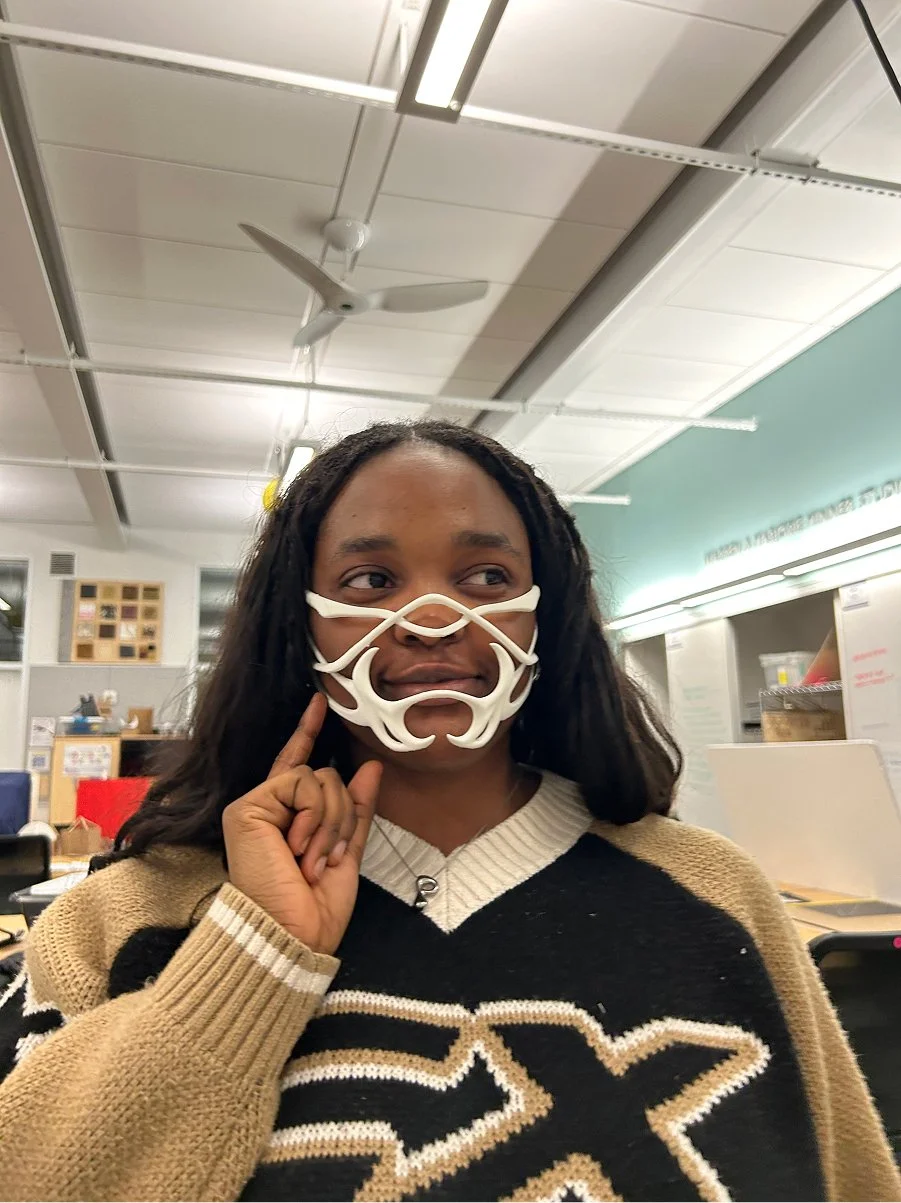
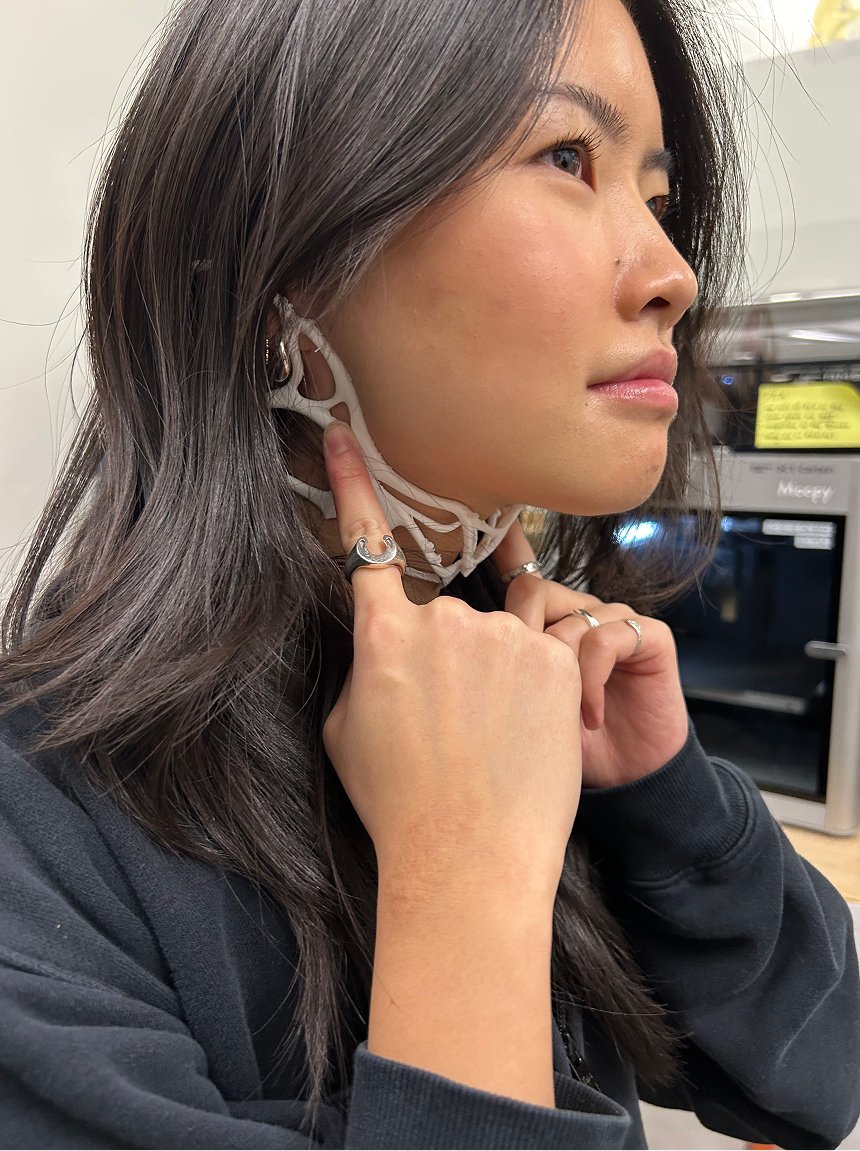
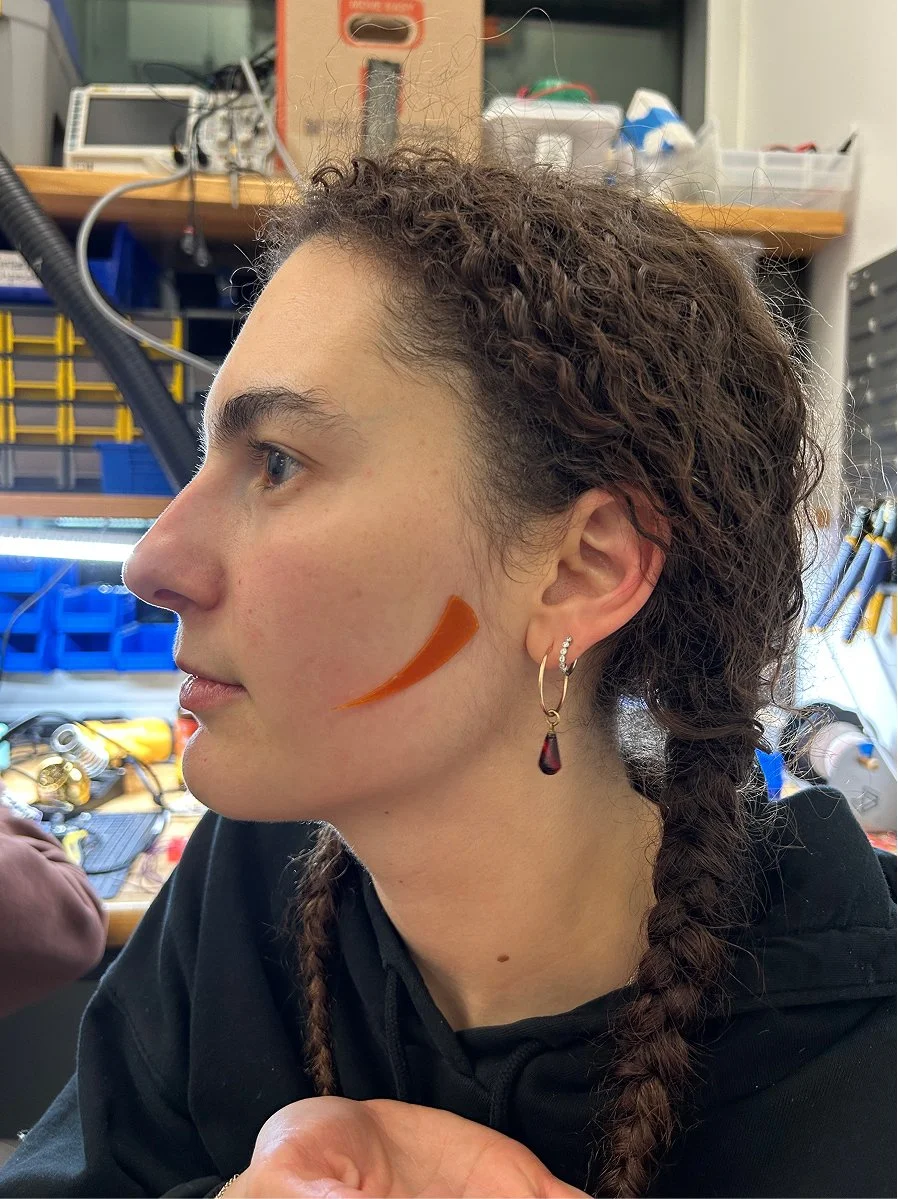
Prototyping variations of a wearable that measures how well you chew your food (3d printed)
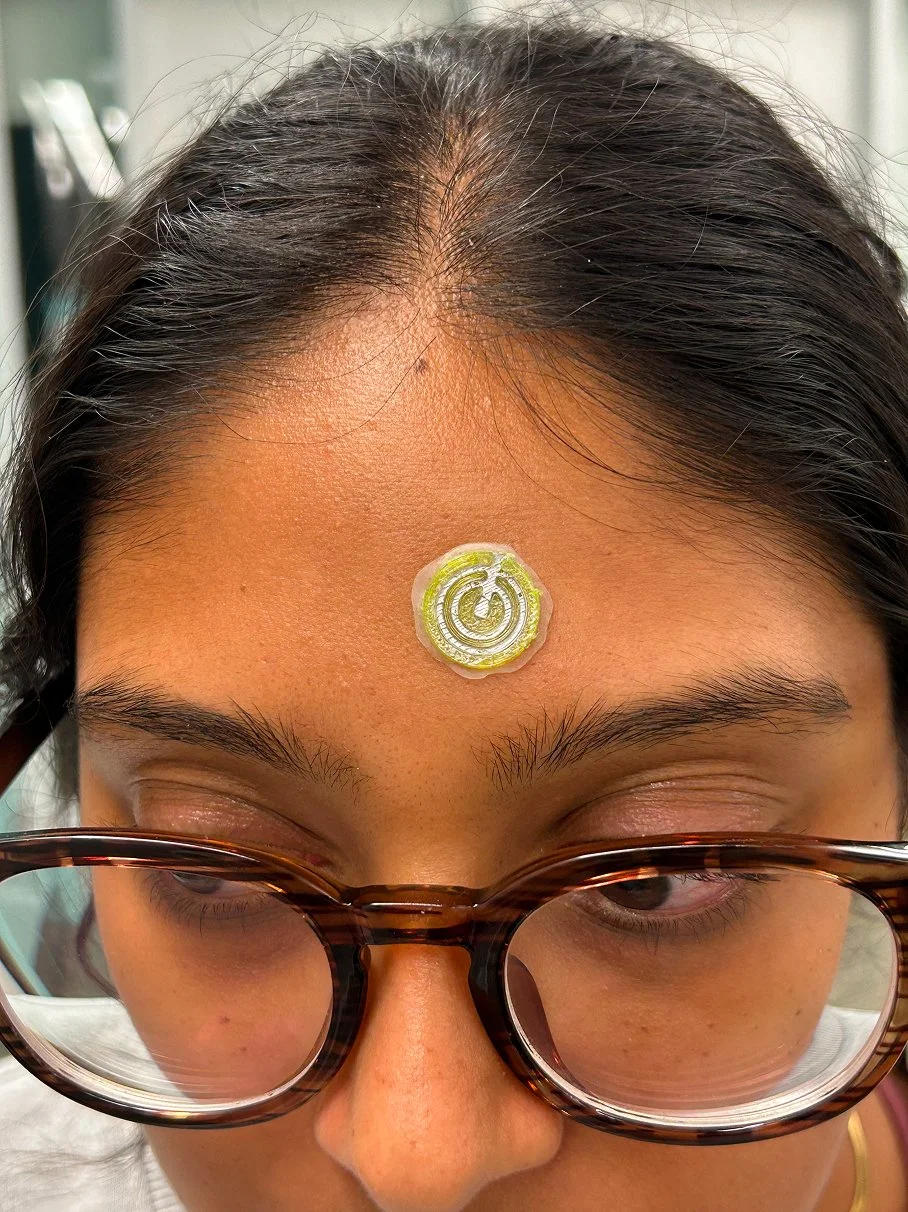
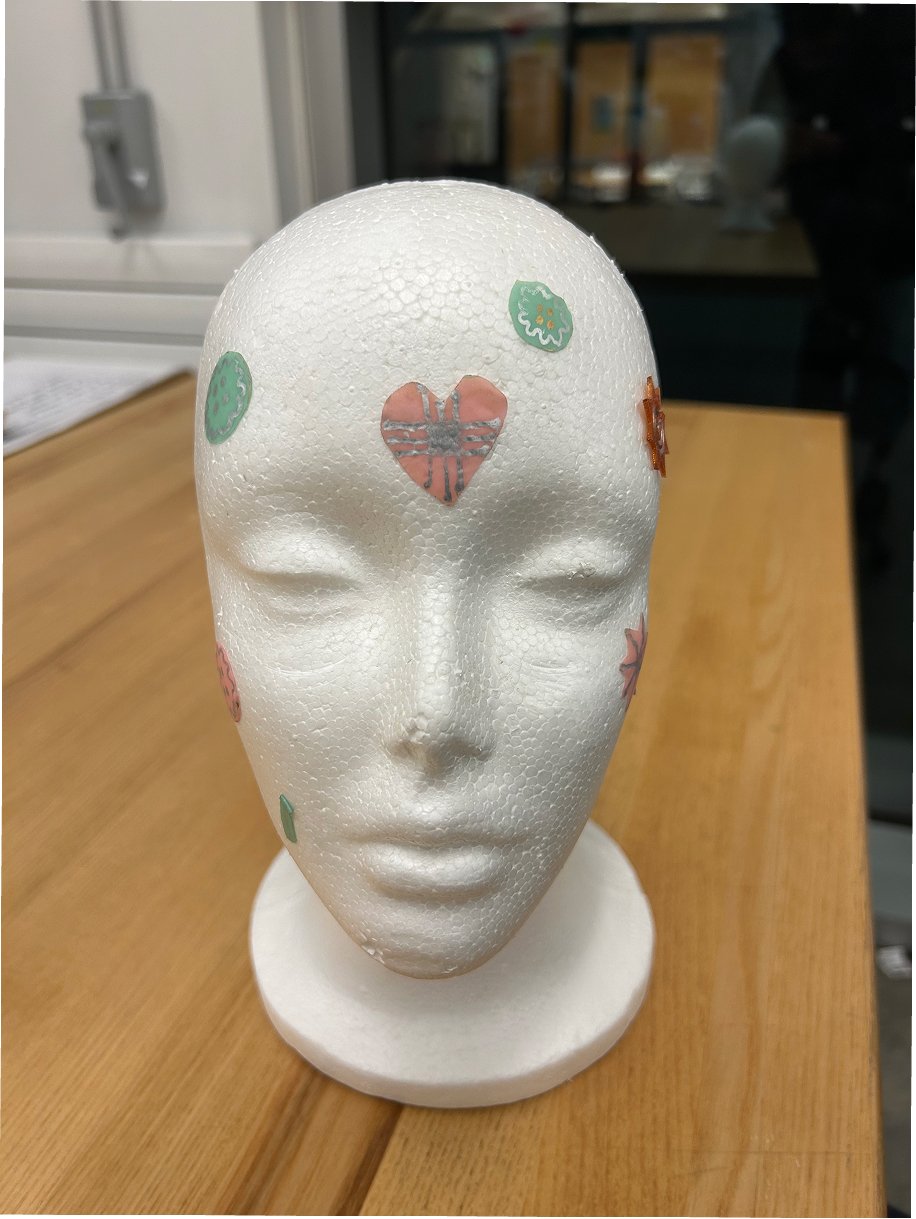
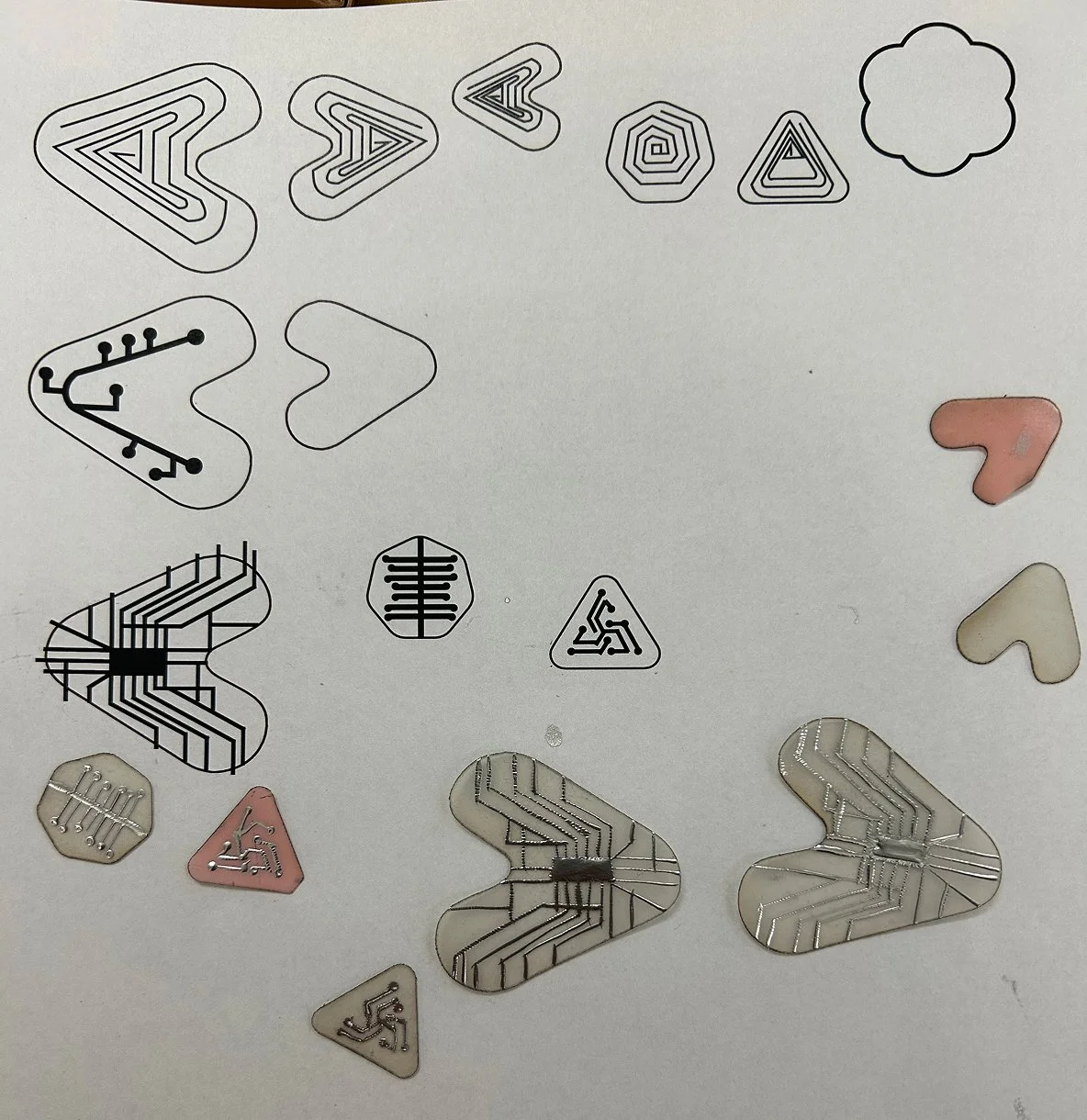
Exploring form factors and shapes for wearables in the form of stickers
These prototypes and explorations of futuristic wearables provoked more of the “WTF, why are we tracking this?!” reactions I was looking for, so I knew this was the right direction to take the project in.
Mu: THE FUTURE OF WELLNESS
What if we take self-tracking with wearables to the extreme, and make it desirable?
The prototyping process showed me that focusing on new kinds of wellness wearables—and what they measure—was a more effective way to provoke reflection on how they can encourage self-surveillance. In line with critical design principles encouraging satire, I wanted to push this idea further, stretching it to an extreme where the line between absurdity and aspirational starts to blur.
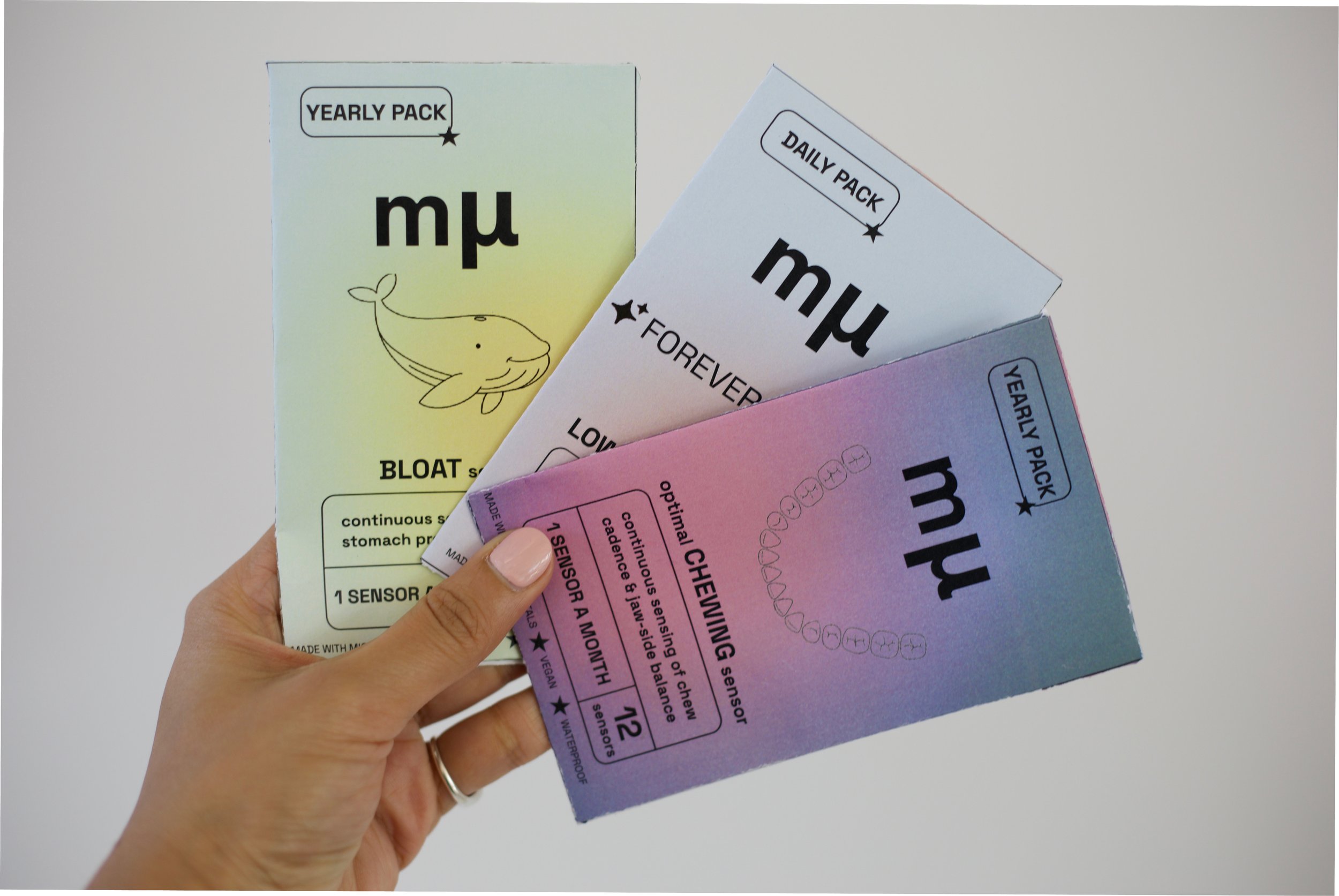
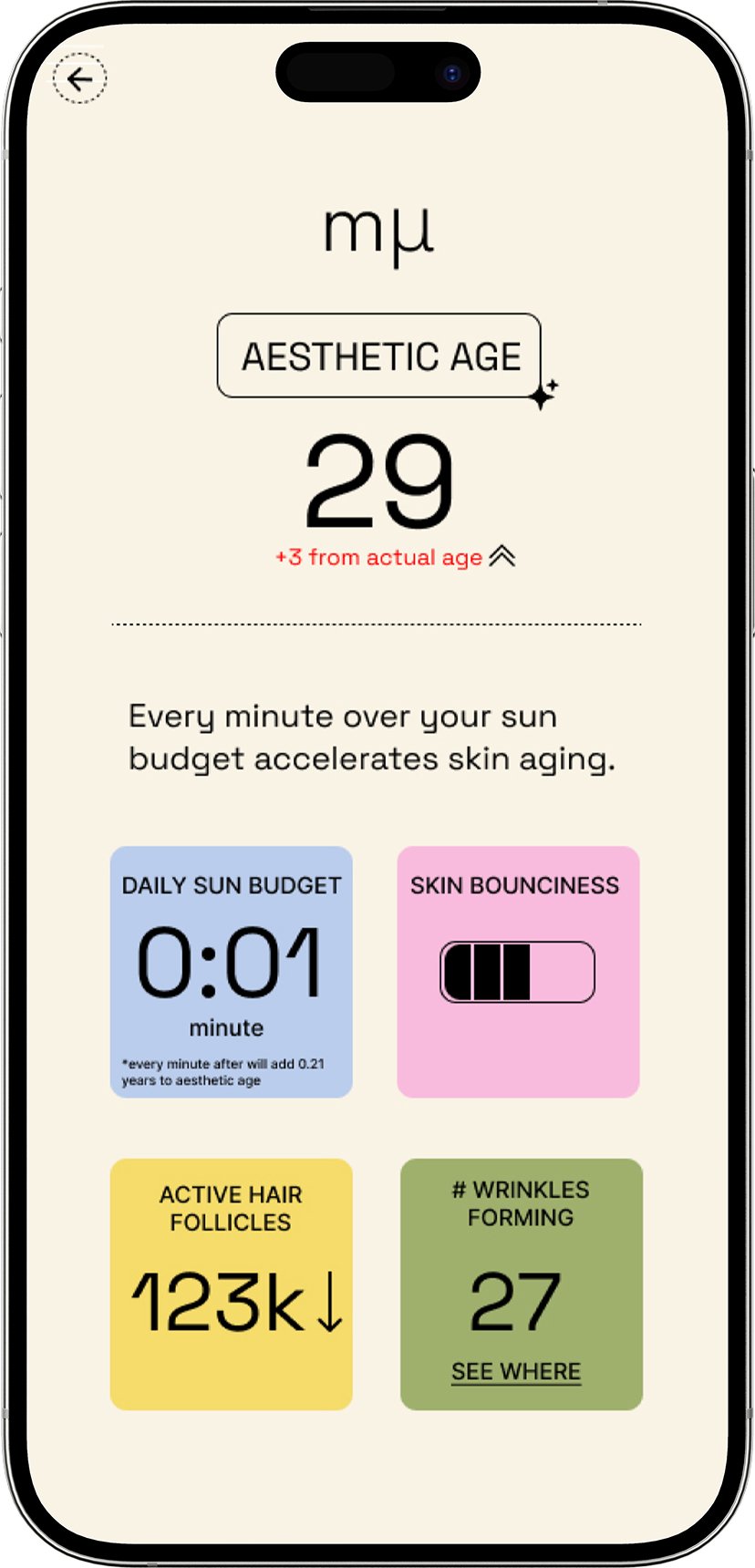
As a result, mμ (measure urself) was born. mμ is a satirical, near-future wellness brand with wearable products that track increasingly specific and unnecessary data about the body. To bring it to life, I created wearable sensor prototypes, packaging and branding, and a companion app that presents the data in anxiety-inducing ways. The branding and packaging is a nod to the visual language of current wellness brands, and I poked fun at current wellness metrics like 10,000 steps a day (mu’s version is 10,000 chews a day).
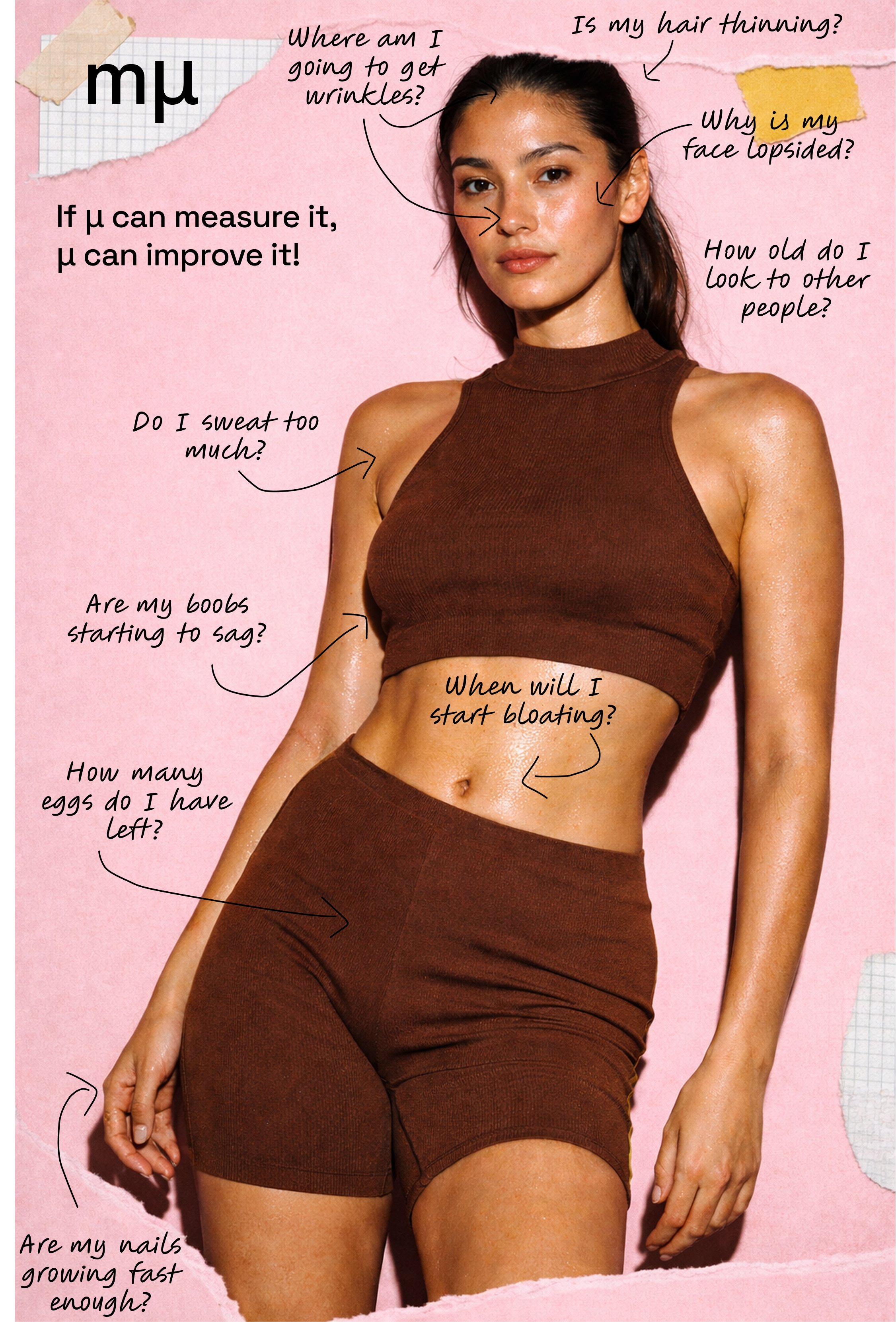
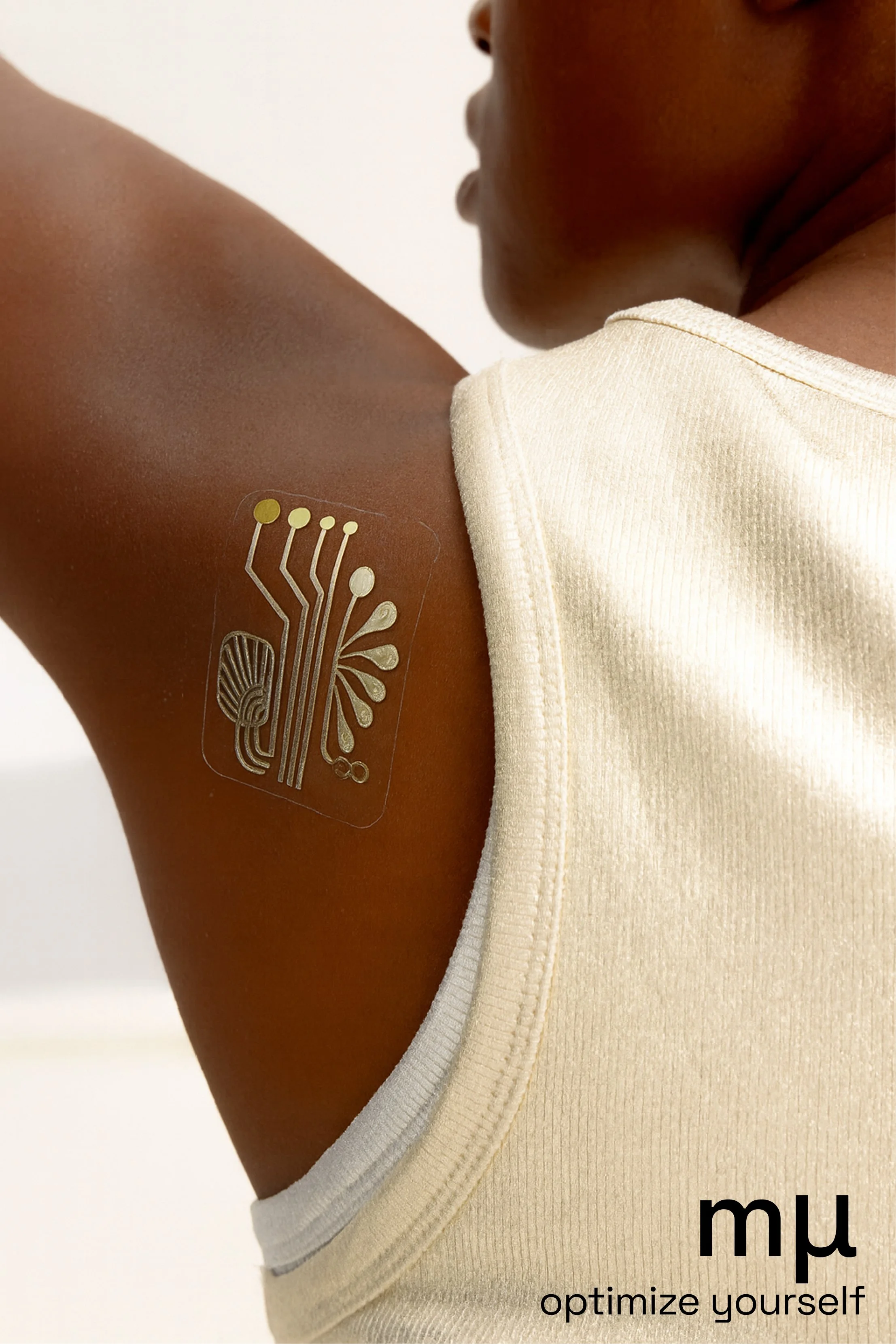
Brand/concept posters
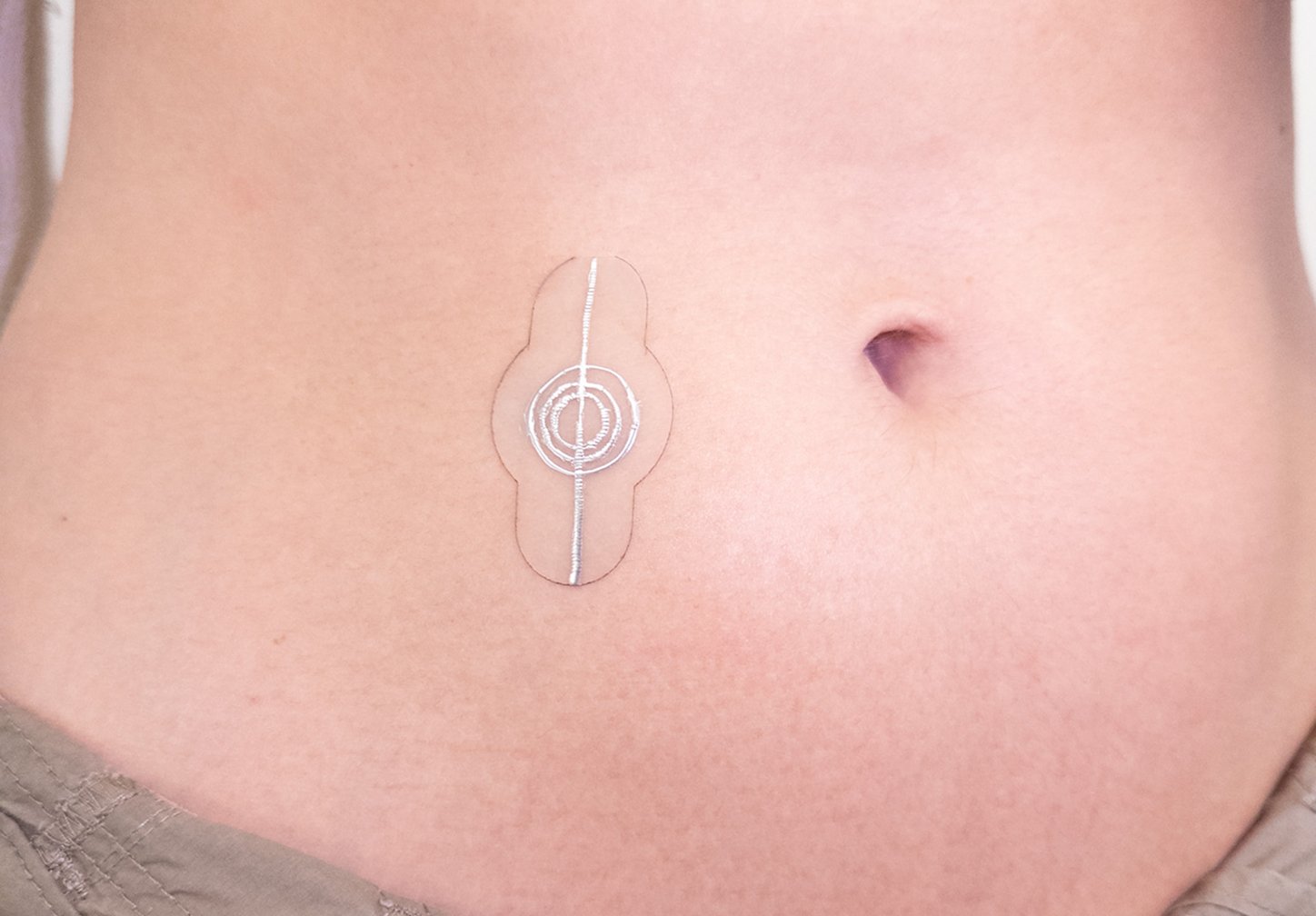
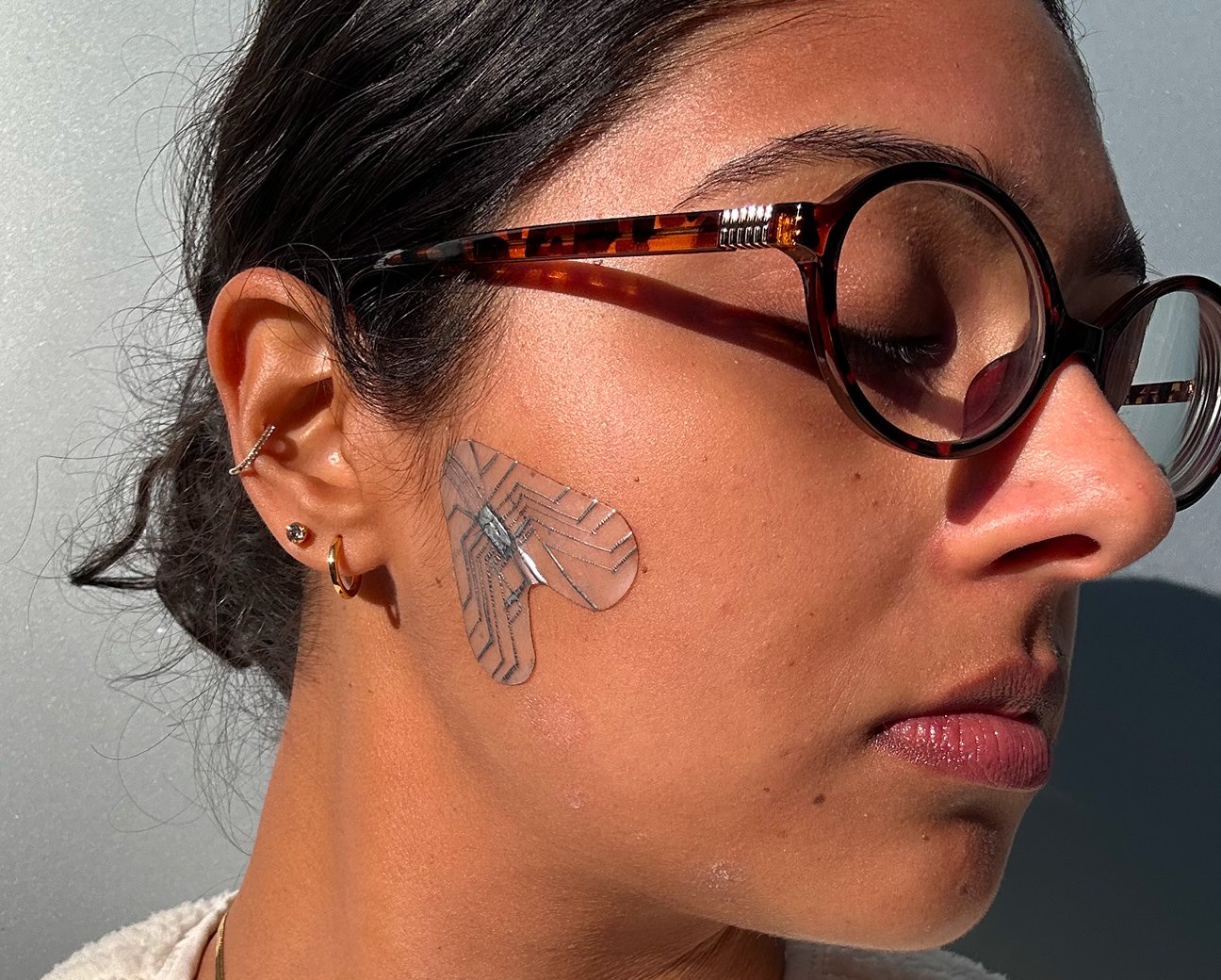
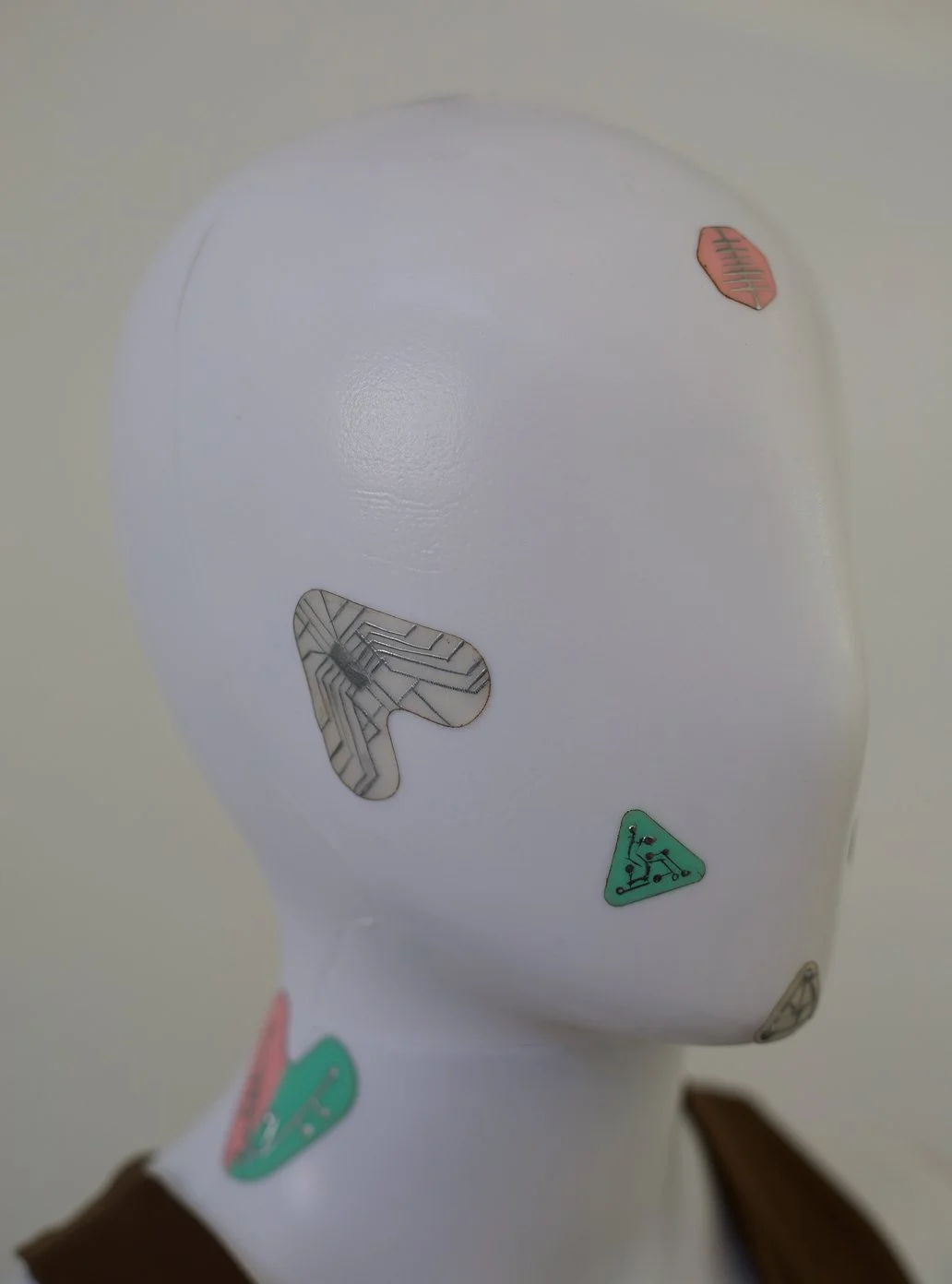
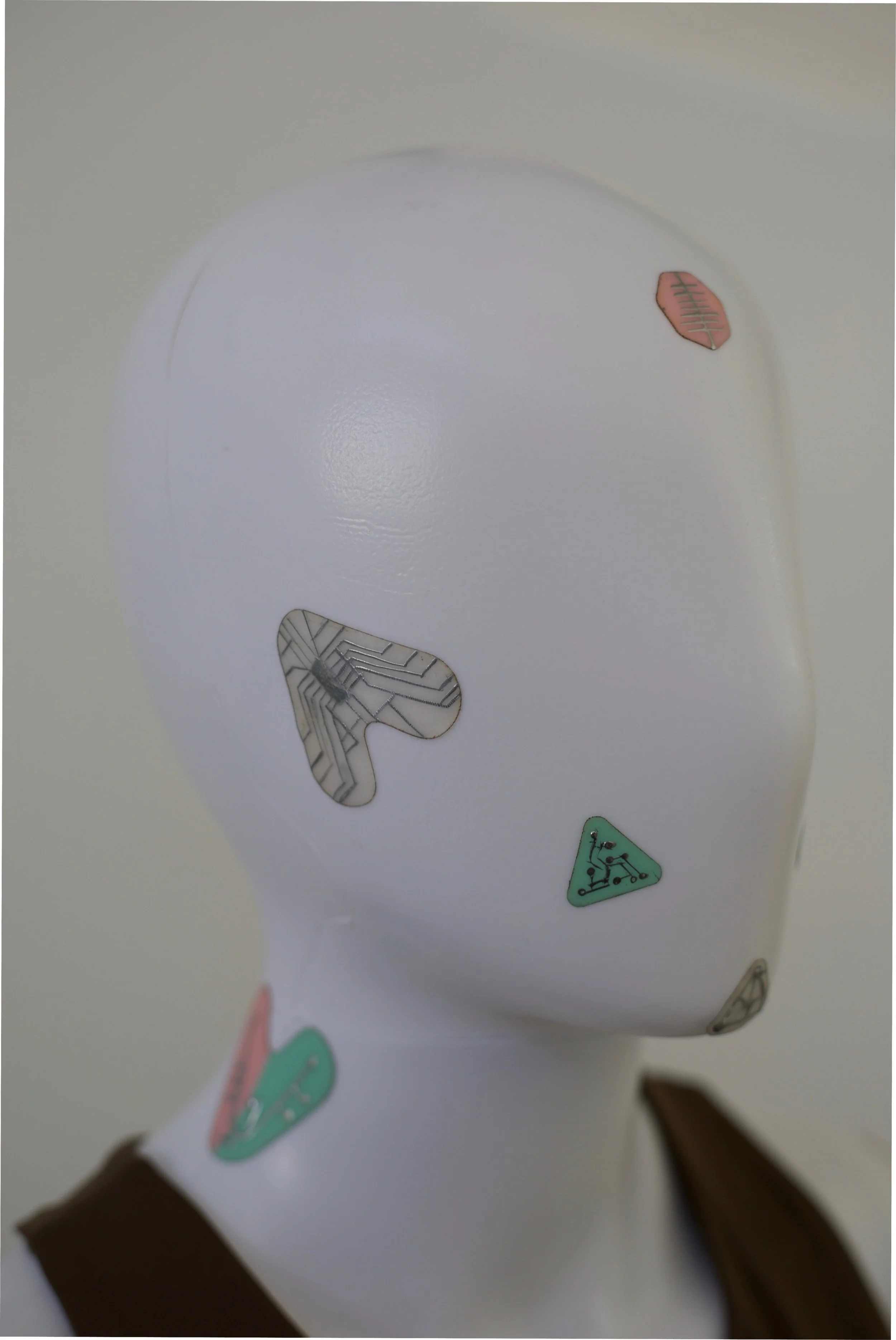
Wearable sticker sensors for measuring chewing, bloating, hair follicle count, skin hydration levels, posture, and more
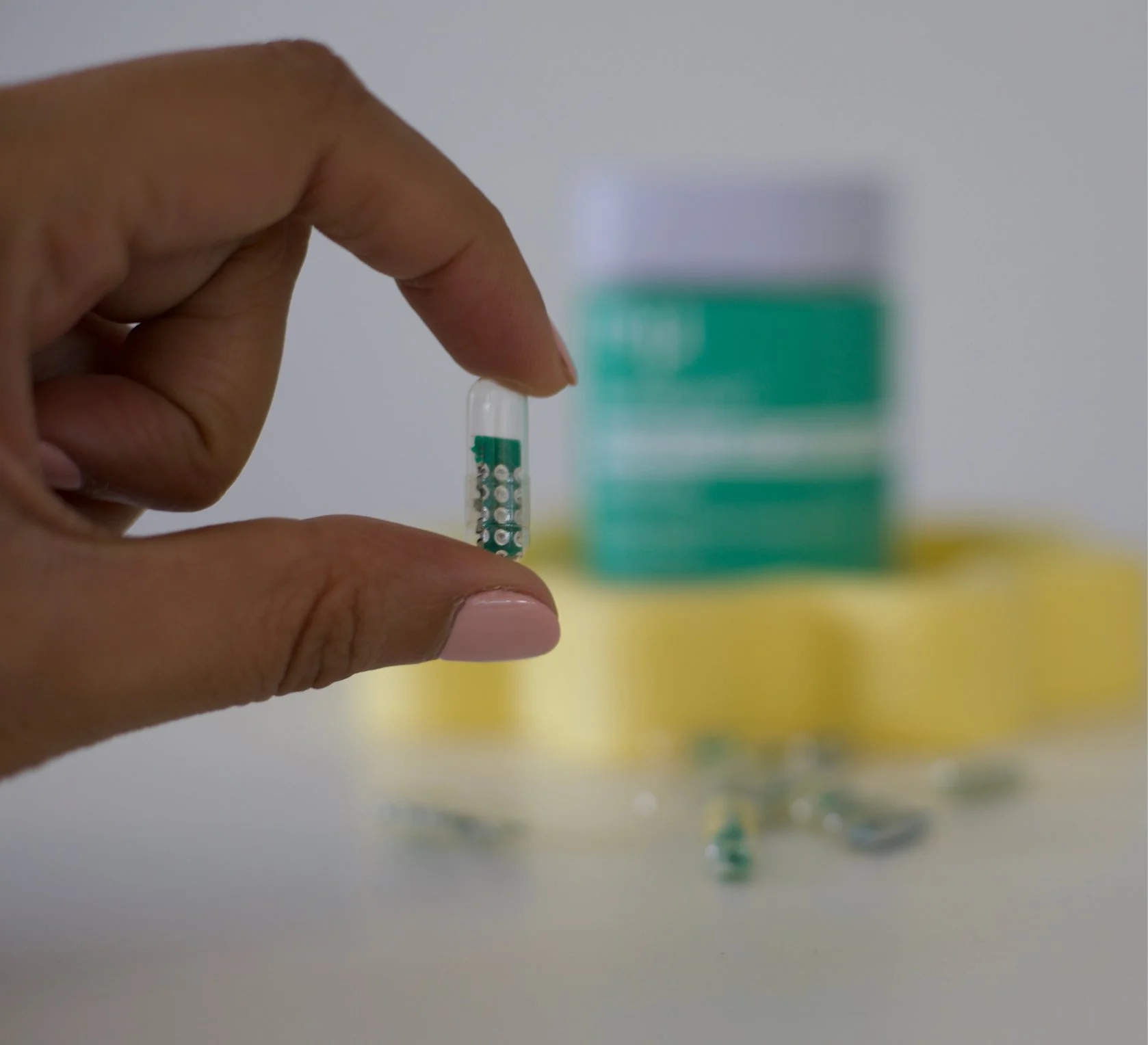
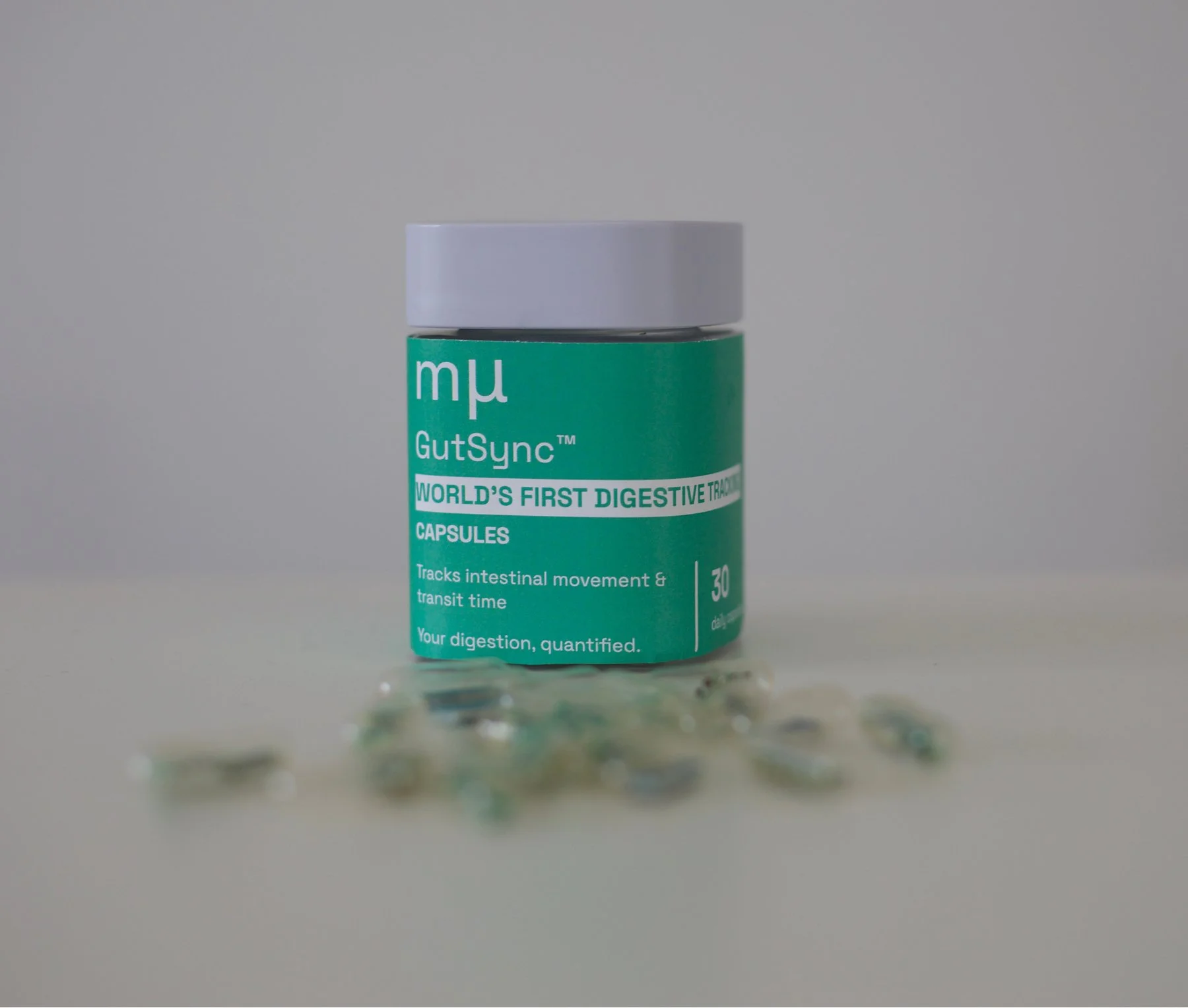
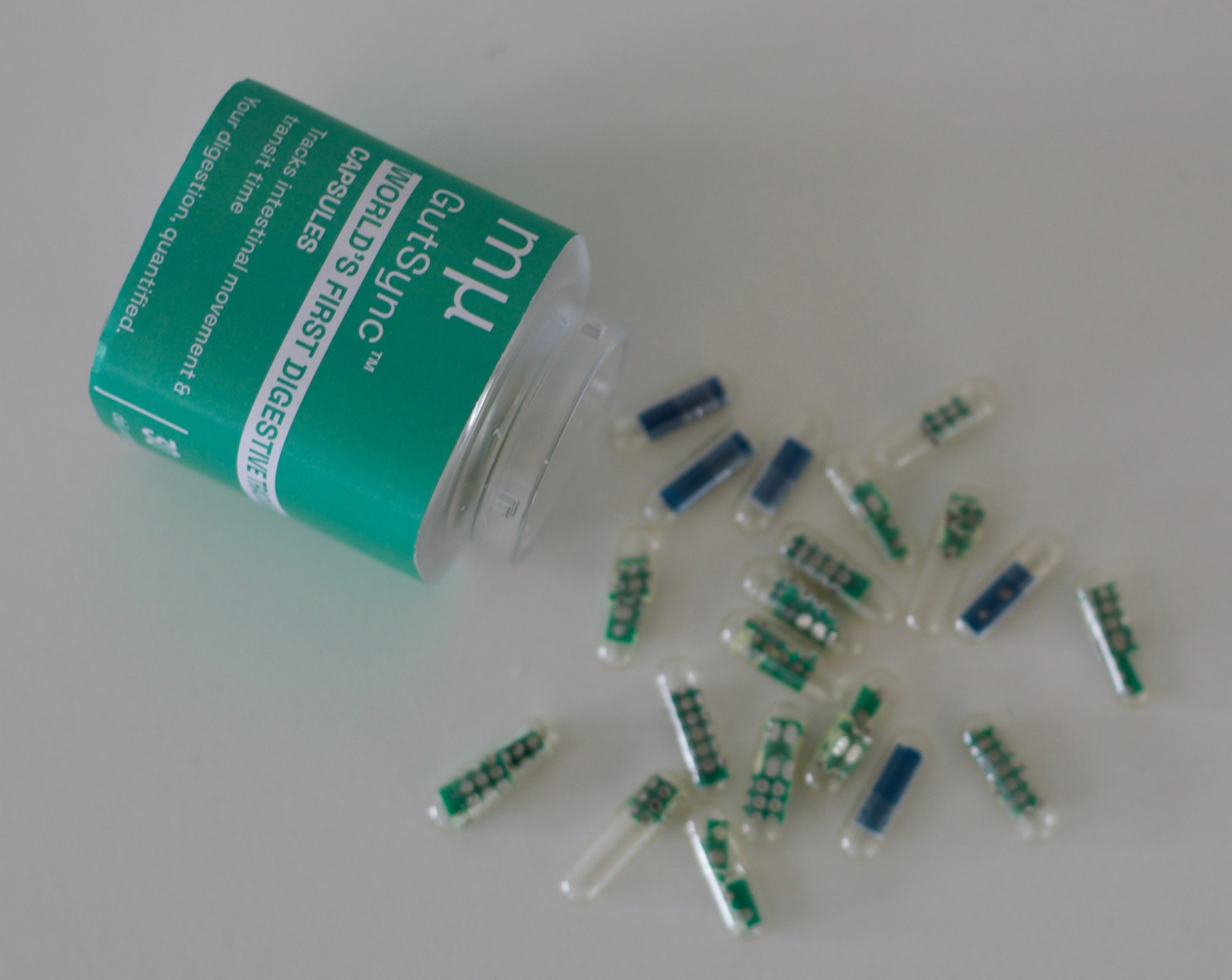
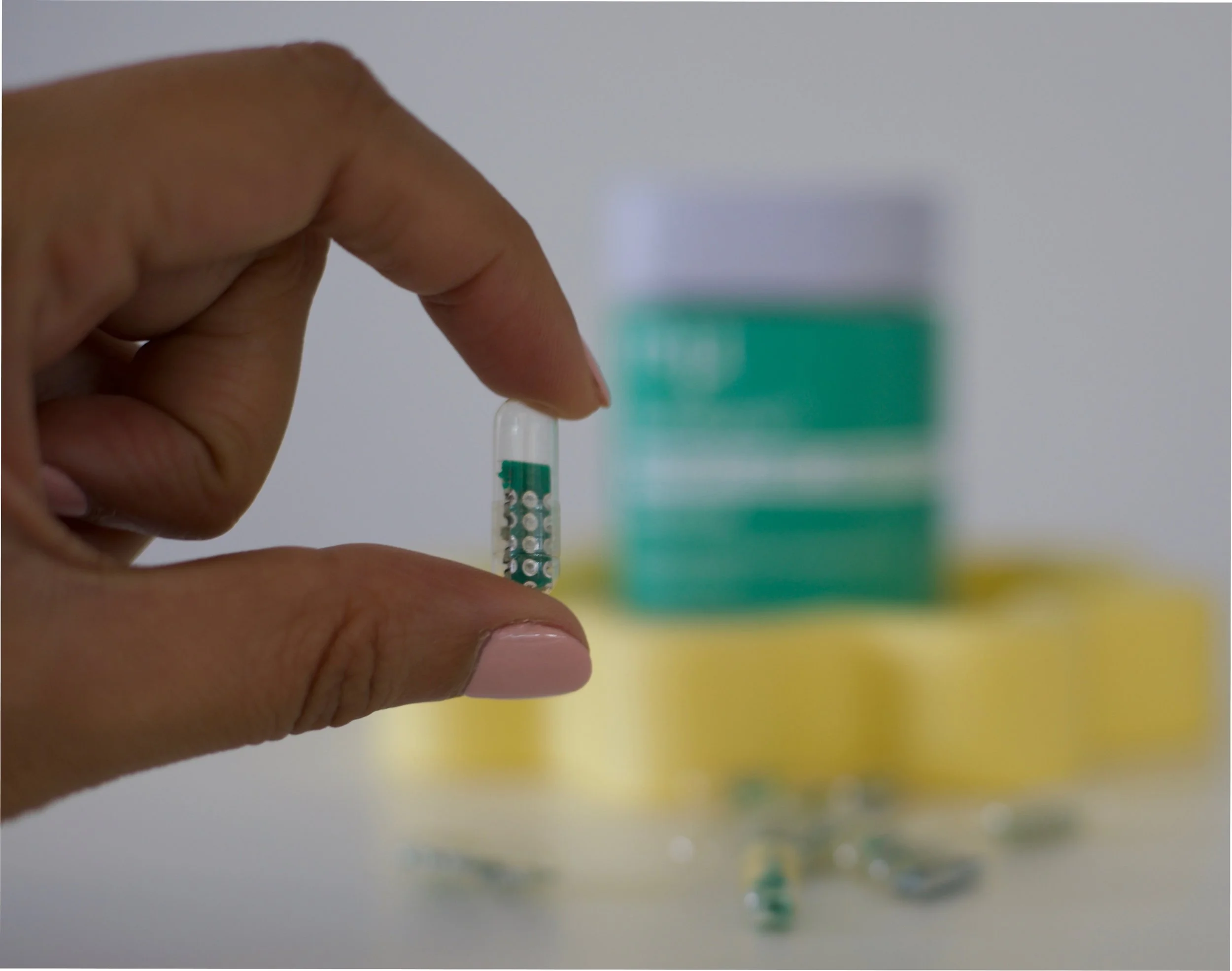
Ingestible pill sensors for tracking intestinal movements and gut motility
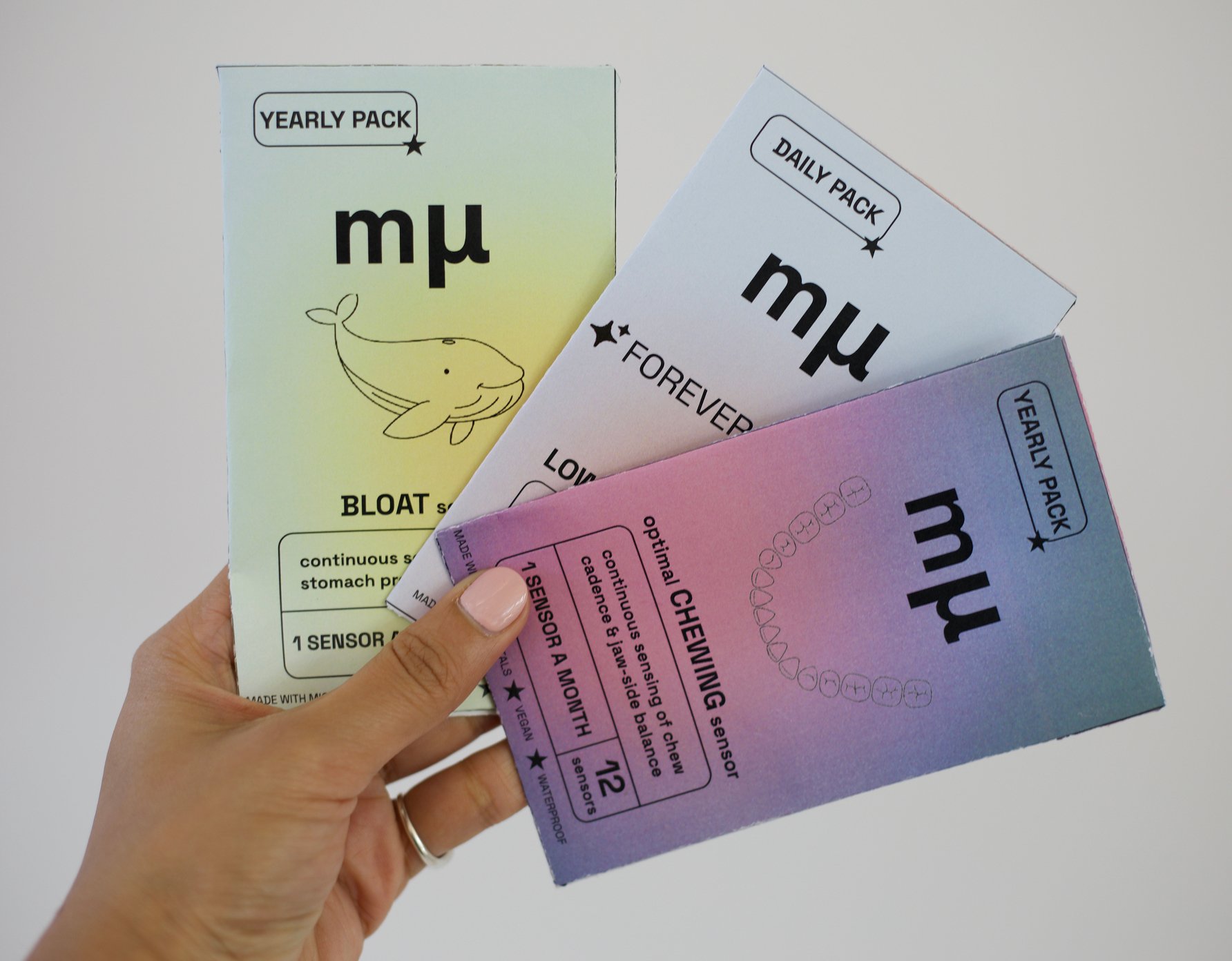
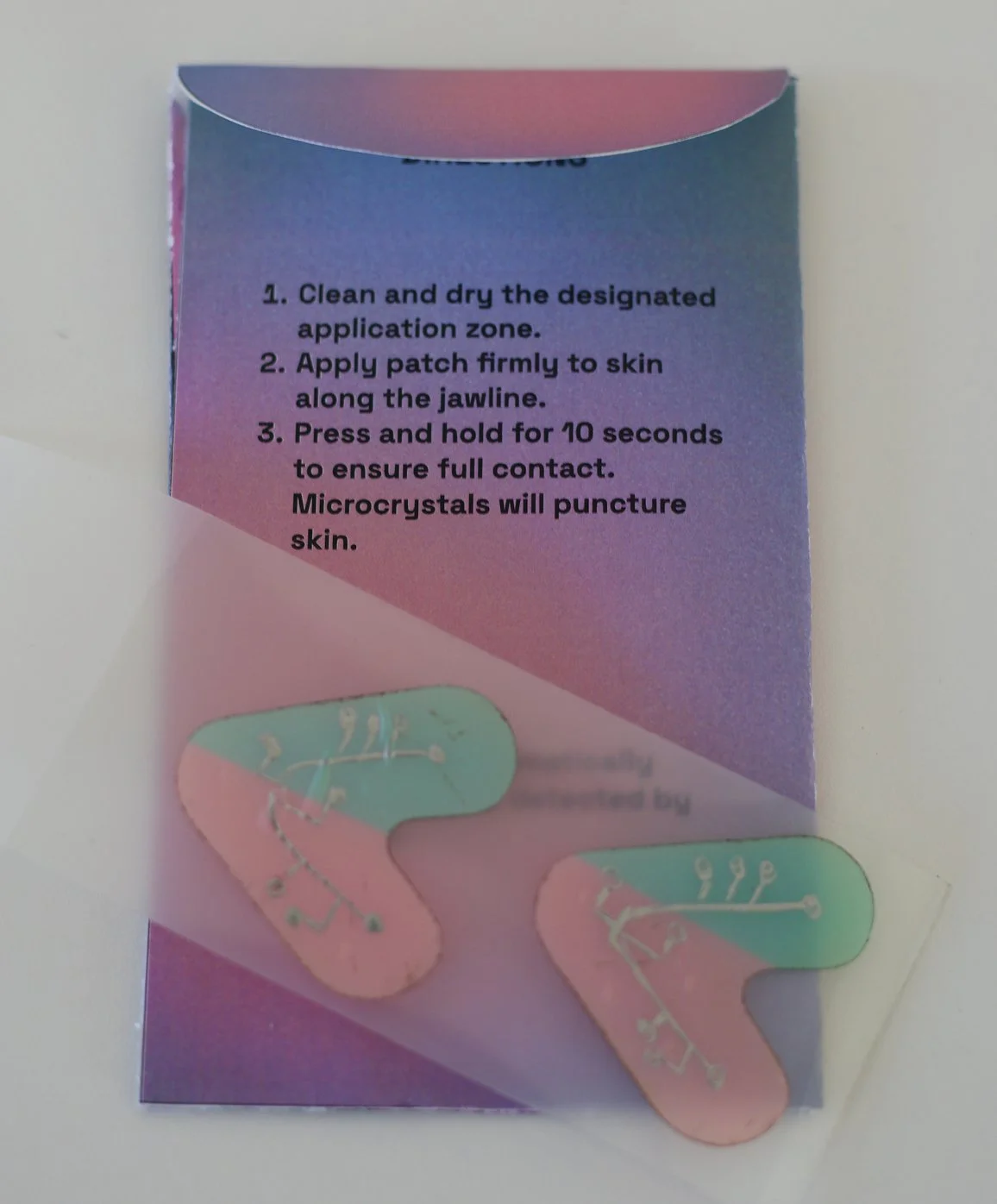
Wearable sticker sensor packaging
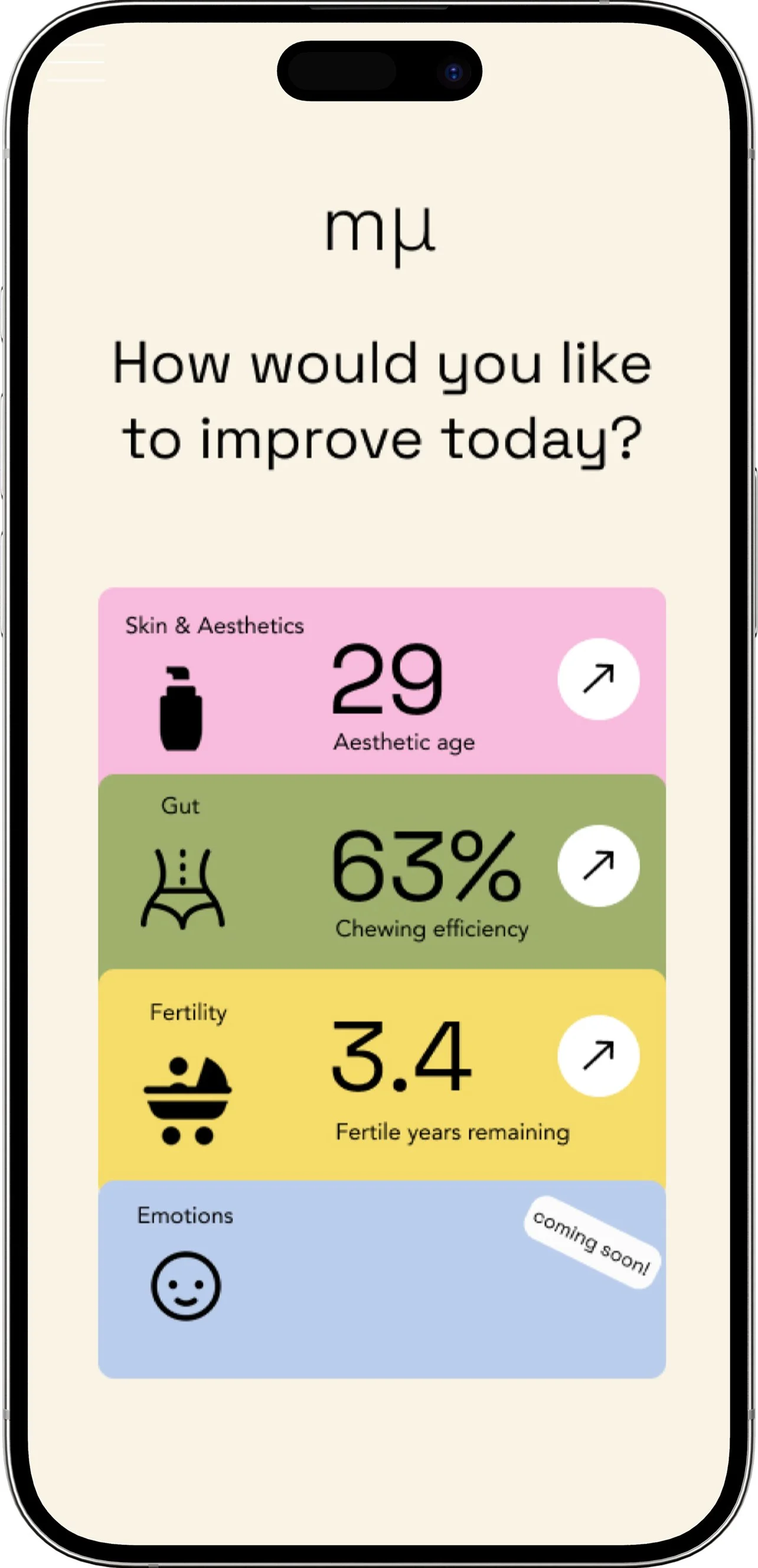
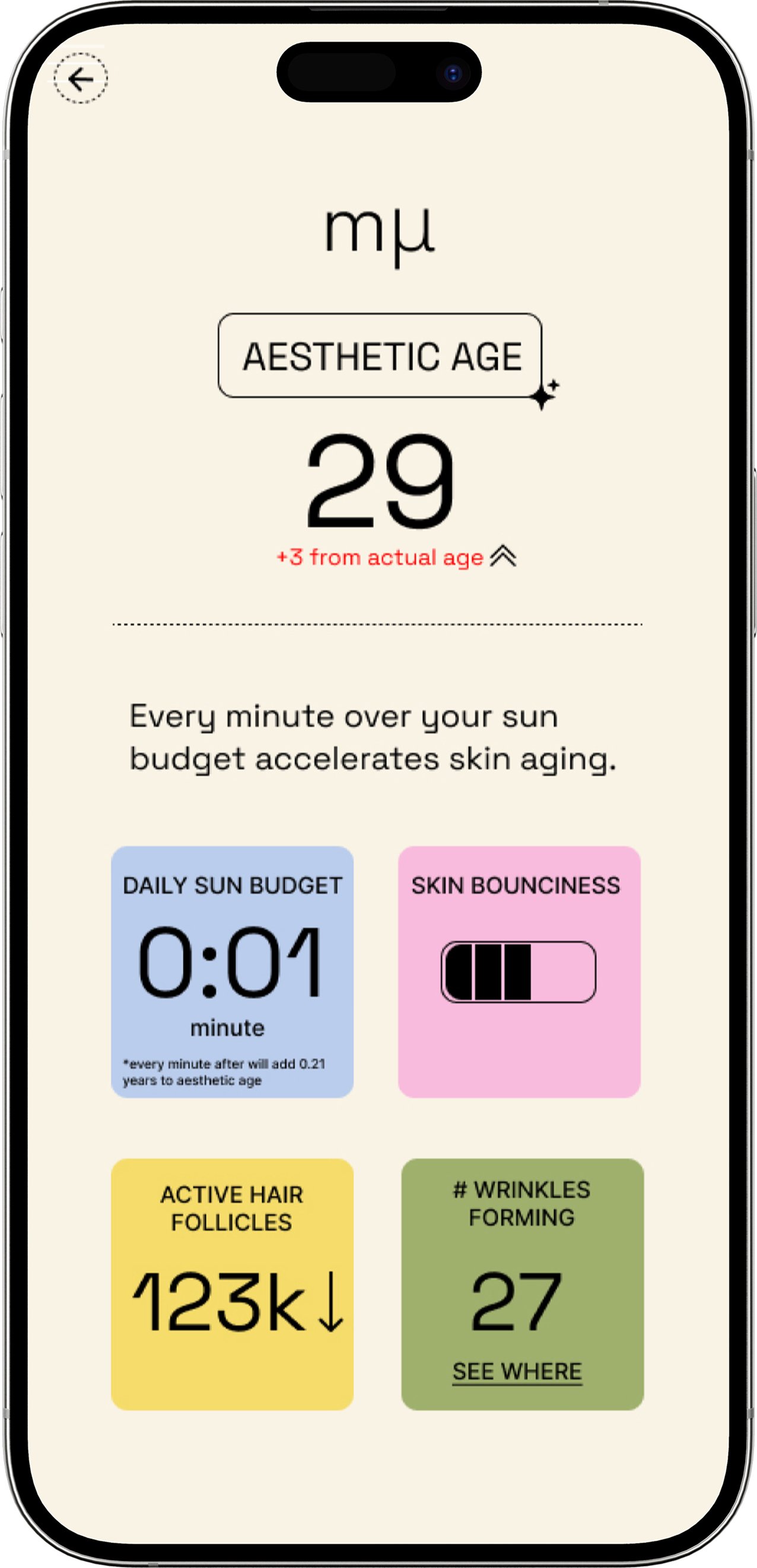
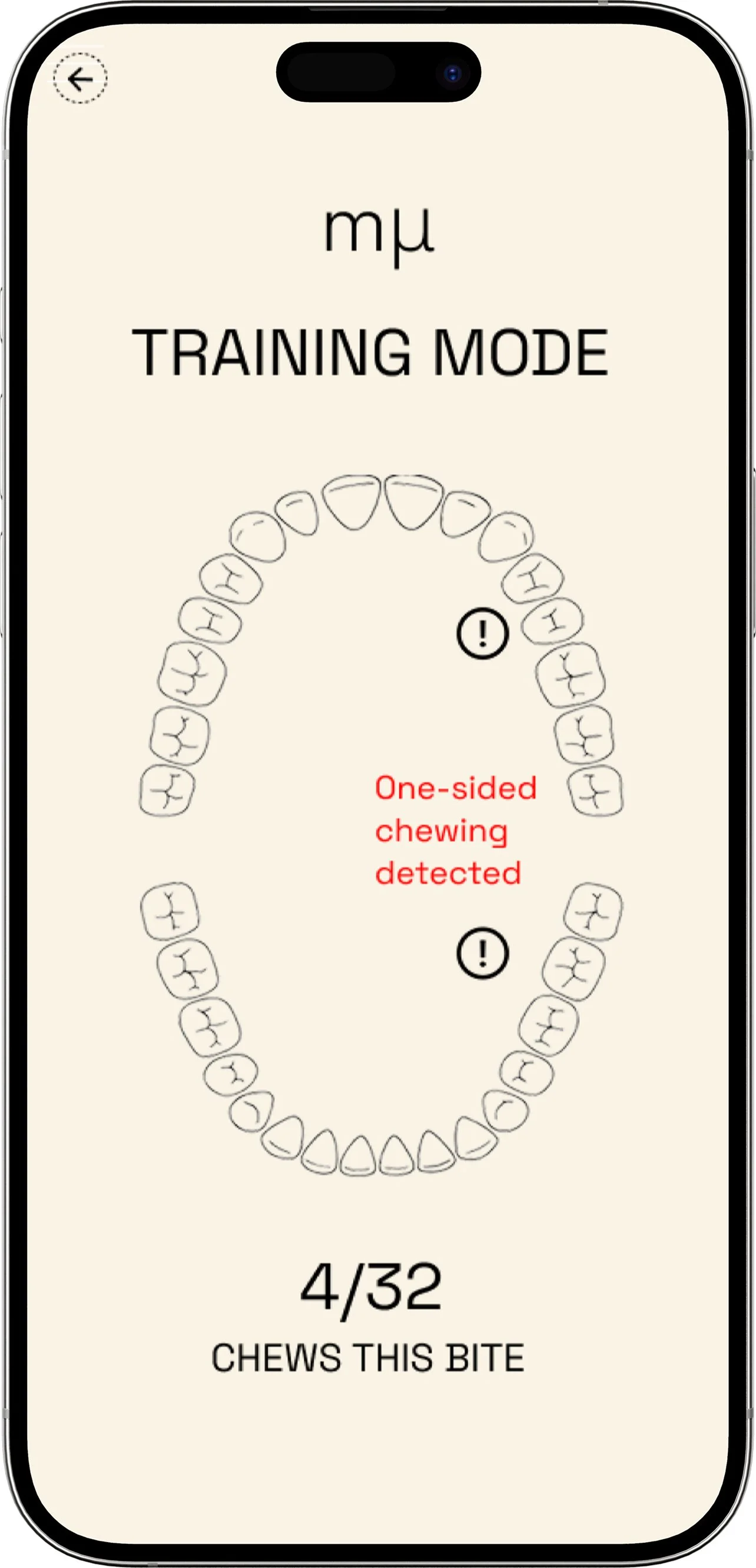
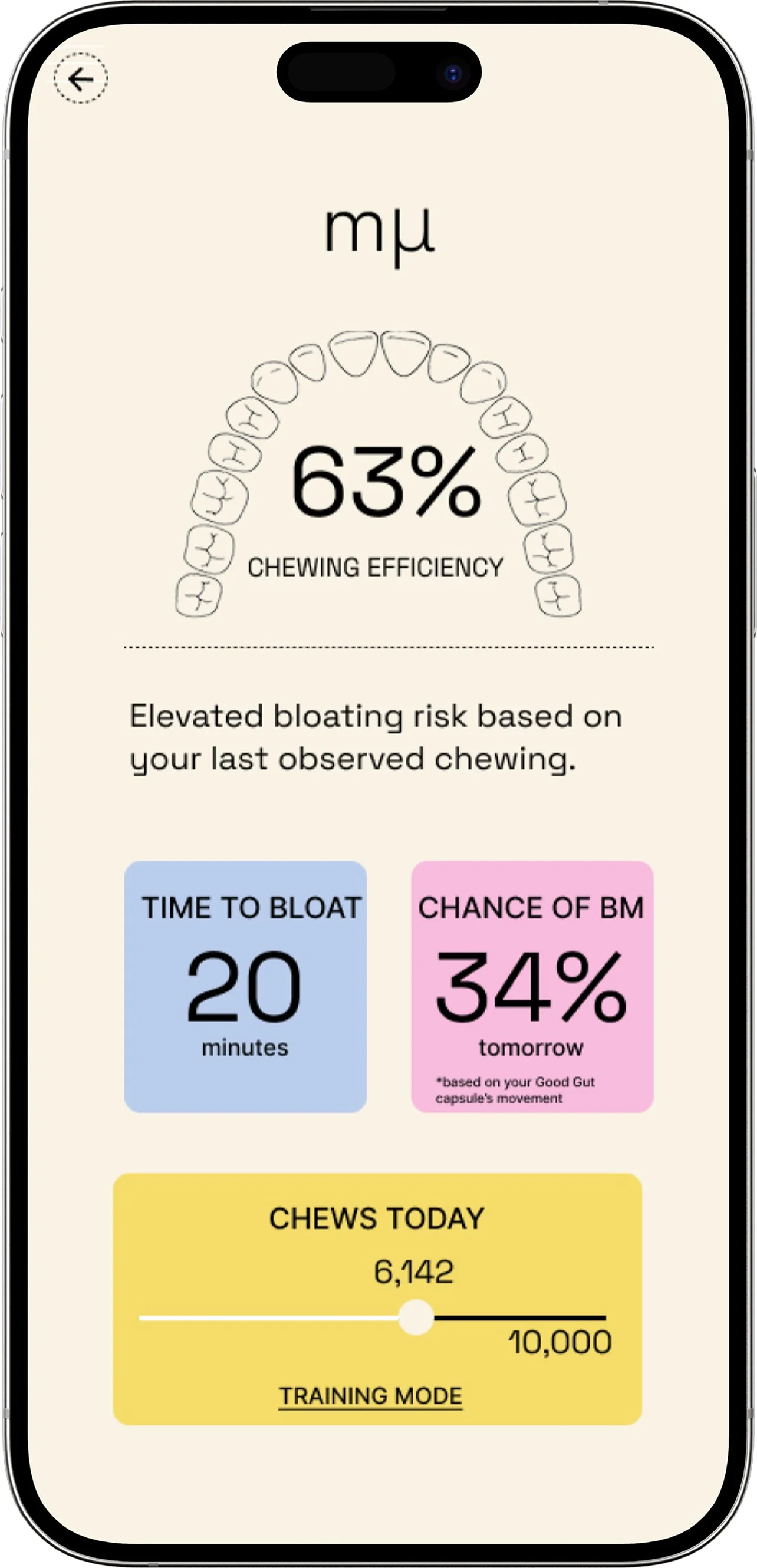
Companion app to display data from sensors
I still wanted to highlight the role of social media content in making these wellness technologies feel desirable, so I created TikTok videos in character as a wellness influencer promoting the brand.
BRINGING MU TO THE PUBLIC
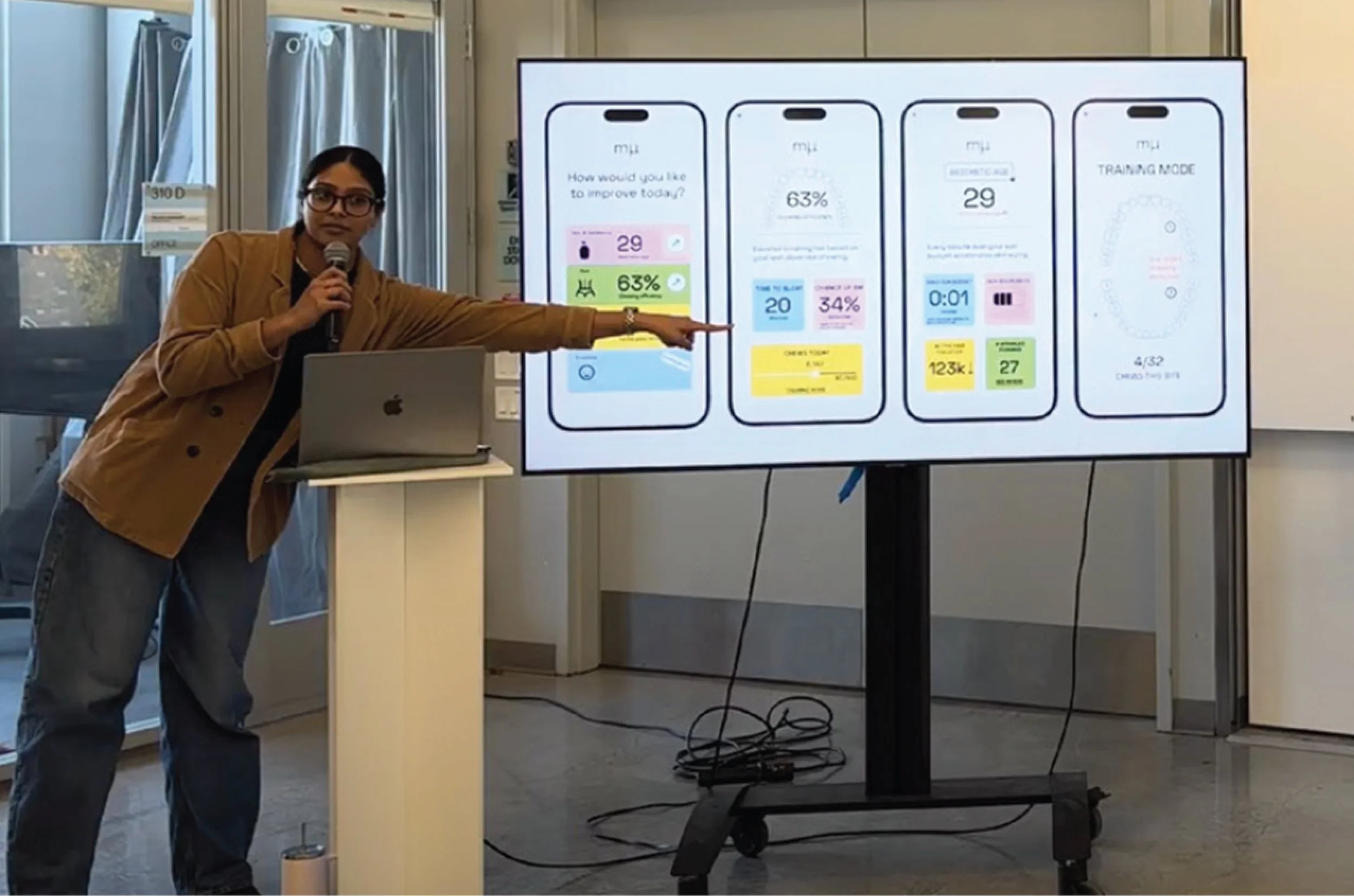
To gauge live reactions, I performed a brand pitch as a wellness influencer to an audience of designers, technologists, and creatives. I tailored the structure of the pitch based on other wellness brand pitches.
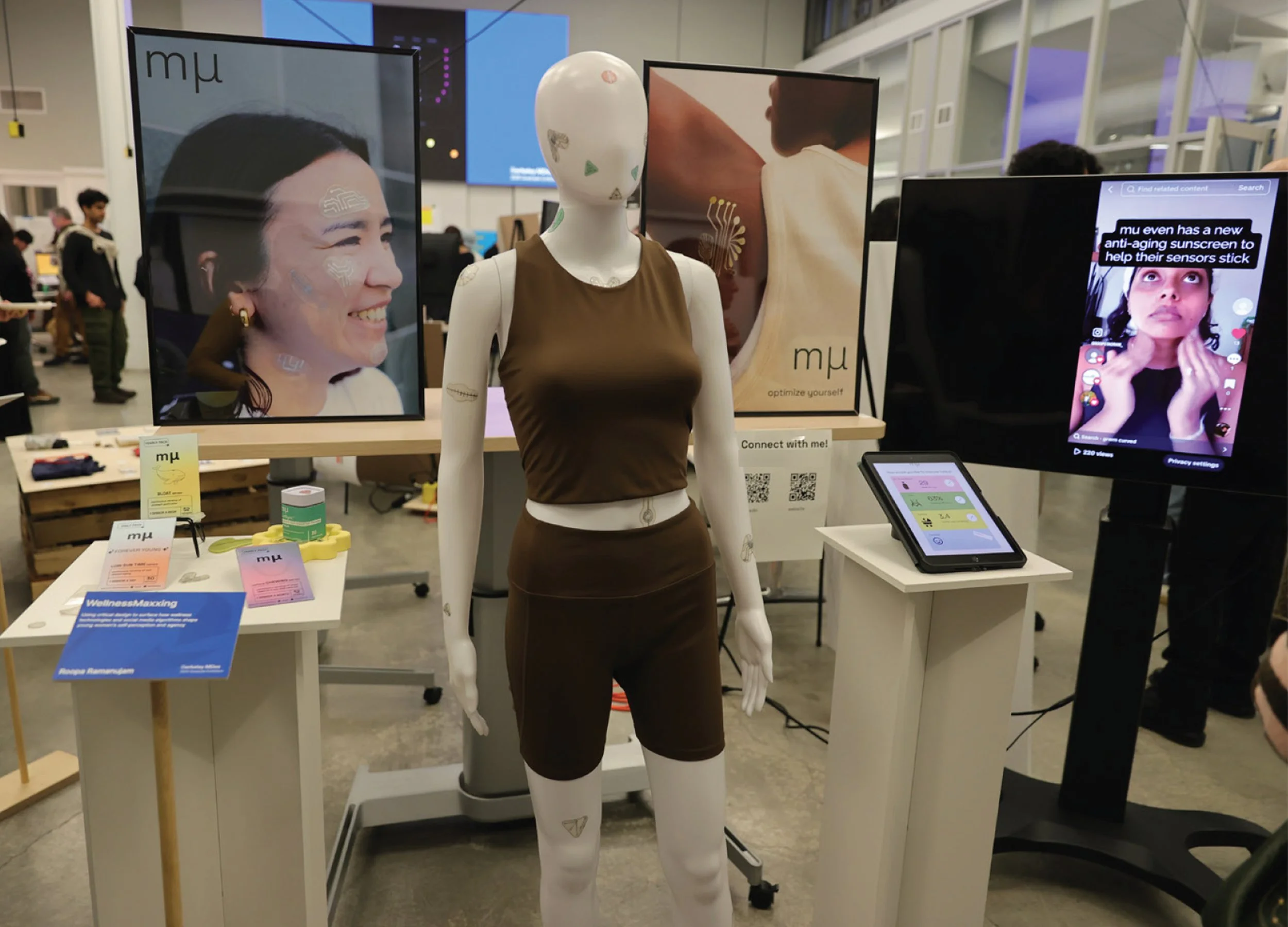
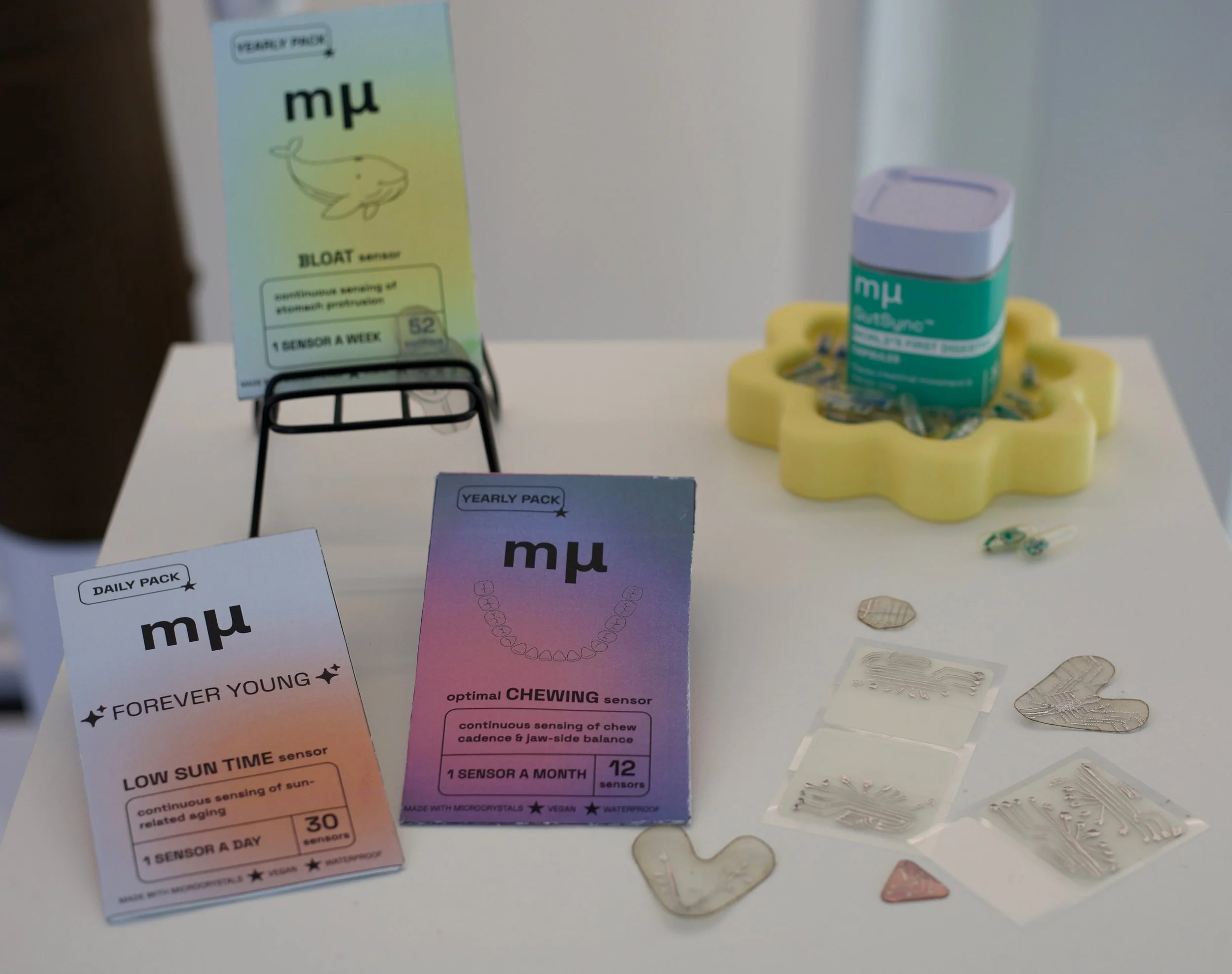
I also set up an exhibit in the form of a storefront for the brand, so people could interact with the artifacts.
reactions
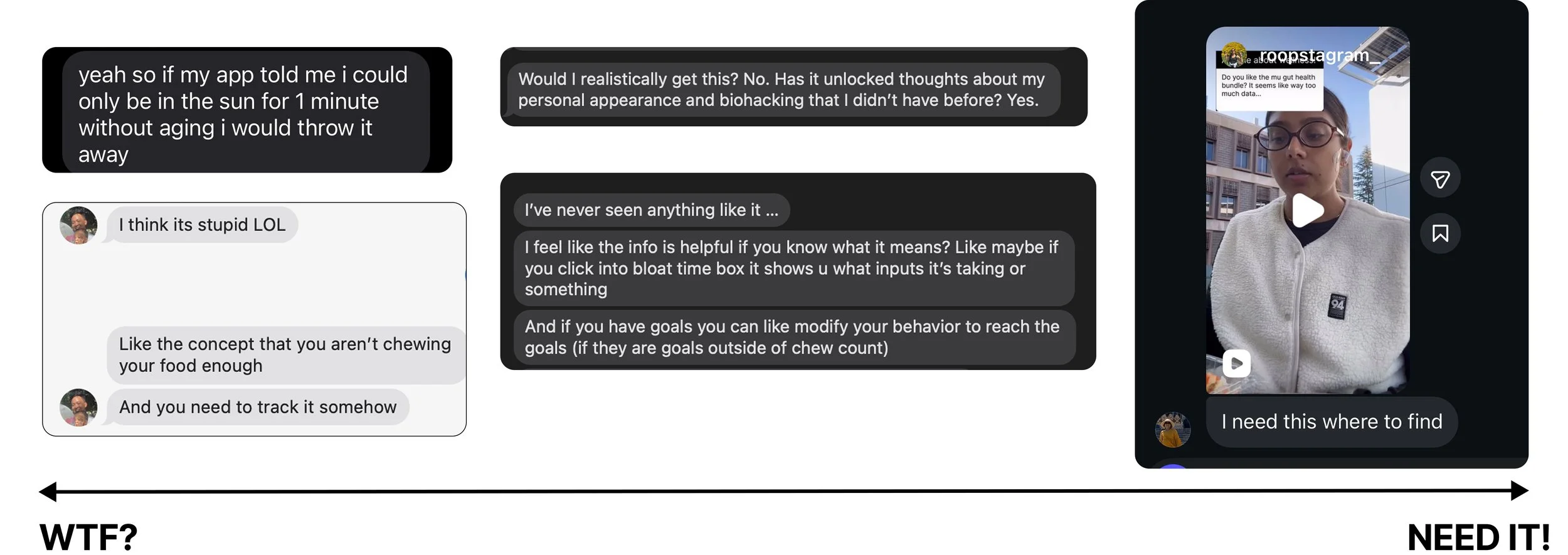
Dunne & Raby say that for a critical design to be successful, it should provoke a range of reactions and make people question whether or not the design is real. Based on the reactions I observed to the brand, I would argue that this is a successful critical design!
IMPLICATIONS
Wearables become self-surveillant not because of the devices themselves, but because of the social and cultural systems surrounding them.
The same wearable could feel helpful, aspirational, absurd, or invasive depending on context and personal beliefs.
Wellness is increasingly becoming performative, with wearables acting as visible symbols of self-optimization and identity.
We need to be designing wellness technologies that encourage self-trust rather than obsessive self-monitoring.
REAL WEARABLES RELEASED since…